How to Clean and Maintain Fingerboard Bearings and Wheels
Fingerboard bearings should be cleaned whenever they start rolling rough, grinding, or making noise under a light spin. The process involves removing wheels and bearings, soaking them in isopropyl alcohol or a dedicated bearing degreaser, drying them thoroughly, and applying a single drop of light oil before reassembly. Done correctly, cleaning restores smooth spin and extends bearing life significantly. Most active riders find they need to clean bearings every few weeks of regular use, though dusty or dirty surfaces accelerate the need.
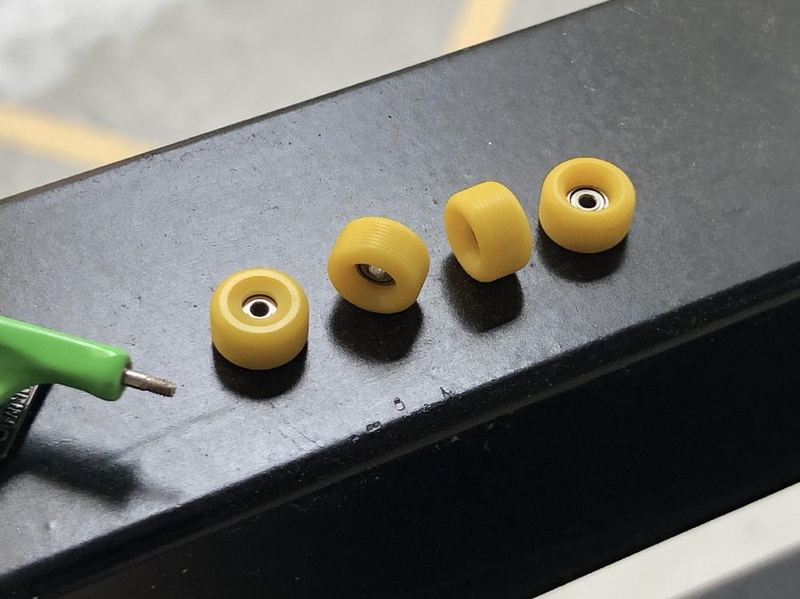
DSG 8mm POM Fingerboard Wheels — High-Speed White
Signs Your Fingerboard Bearings Need Cleaning
Bearings are small precision components and their performance degrades gradually, so it can be easy to miss the early signs that they need attention. The clearest indicator is a rough or grinding sensation when you spin a wheel by hand. A healthy bearing spins freely and quietly; a dirty bearing produces a scratchy, slowing rotation or an audible grinding sound.
Other signs include wheels that stop spinning quickly after a flick (indicating internal friction from debris or dried lubricant), wheels that wobble on the axle (which can indicate dirt packed unevenly inside the bearing), and visible grime or discoloration around the bearing shields. Catching these early means cleaning is enough; letting them go too long risks permanently scoring the bearing races, at which point replacement is the only option.
Removing Wheels and Bearings Safely
Before removing anything, set up a clean, uncluttered workspace. Fingerboard bearings and axle nuts are small and can disappear easily if dropped on a textured surface. A light-colored cloth or tray under your work area makes dropped parts easier to spot.
To remove a wheel, use the appropriately sized socket or nut tool to unthread the axle nut counterclockwise. Keep the nut in a small container immediately. With the nut removed, slide the wheel off the axle. Most fingerboard wheels use a standard press-fit bearing on each side of the wheel core. To remove bearings from the wheel, use a bearing press tool or carefully leverage the bearing out using the axle itself: slide the wheel back onto the axle slightly off-center so the axle contacts the bearing's inner race and push or pry gently. Avoid using sharp tools against the bearing shields, as bending or denting a shield introduces debris paths directly into the bearing.
Cleaning with Isopropyl Alcohol or Degreaser
Isopropyl alcohol at 91% concentration or higher is the most accessible and effective cleaning solvent for fingerboard bearings. Higher concentrations evaporate faster and leave less residue. Dedicated bearing degreasers designed for full-size skate bearings also work well and are often formulated to cut through built-up lubricant faster than IPA alone.
Place the bearings in a small, lidded container — a film canister, a small glass jar, or even a shot glass covered with a piece of card will work. Add enough solvent to submerge the bearings and shake or swirl gently for thirty to sixty seconds. Empty the solvent and refill with fresh solvent for a second rinse, especially if the first pass came out visibly discolored from old lubricant and debris.
While bearings are soaking, clean the wheel cores by wiping them with a cloth dampened with the same solvent. Remove any packed-in grime from the bearing seat in the wheel, as this debris will contaminate freshly cleaned bearings immediately on reassembly if left behind.
Drying Properly Before Re-Lubrication
This step is the one most often skipped, and skipping it causes lubricant to mix with residual solvent, which dilutes the oil and defeats the purpose of cleaning. After the final rinse, remove bearings from the solvent and let them air-dry completely. Spinning them by hand occasionally while drying helps solvent inside the races evaporate faster. Allow at least ten to fifteen minutes of drying time at room temperature.
You can speed drying with a hairdryer on a low heat setting held at a safe distance, but avoid using compressed air directed into the bearing interior, as this can push contaminants deeper into the races rather than clearing them. The bearing should spin freely and feel notably smoother than before cleaning when it is properly dry — if it still feels gritty, a third rinse is warranted.
Re-Lubrication and Reassembly
Once bearings are completely dry, apply lubricant before any dust or debris can settle inside the races. Use a light machine oil or a dedicated skateboard bearing lubricant — a single small drop per bearing is sufficient. The goal is to coat the ball bearings and races with a thin film, not to fill the bearing cavity. Over-oiling attracts dust aggressively and actually slows spin by creating drag.
Heavy greases should be avoided for fingerboard bearings. Grease is appropriate for full-size skateboard bearings operating under heavy load, but in the tiny geometry of a fingerboard bearing, thick grease creates excessive drag and eliminates the free-spinning roll that makes fingerboarding enjoyable.
To reassemble, press the bearing back into each side of the wheel until it seats flush. Slide the wheel onto the axle and thread the axle nut clockwise until snug. Avoid overtightening, which compresses the bearing and restricts spin. The nut should be tight enough that the wheel has no side-to-side play but still spins freely when flicked.
How Often to Clean Your Bearings
Cleaning frequency depends almost entirely on where and how often you ride. Riders who session regularly on clean, smooth surfaces indoors may go a month or more between cleanings. Riders who use outdoor surfaces, carpets, or dusty desk setups may find bearings need attention every week or two.
The simplest maintenance habit is a brief spin-check before every session. Flick each wheel by hand and listen for noise or feel for roughness. If anything feels off, a quick clean takes under thirty minutes and prevents the degradation from compounding into bearing damage that requires full replacement.
Frequently asked questions
How do I know when my fingerboard bearings need cleaning?+
Spin each wheel by hand and listen. A clean bearing spins quietly and freely for several seconds. A dirty bearing sounds rough or gritty, stops spinning quickly, or produces a grinding noise. Visible grime around the bearing shields is also a reliable indicator.
Can I use WD-40 to clean fingerboard bearings?+
WD-40 is a water-displacement spray and a light penetrating oil, not a true degreaser. While it can loosen debris temporarily, it leaves behind a residue that attracts dirt quickly and degrades bearing performance over time. Isopropyl alcohol at 91% or higher, or a dedicated bearing degreaser, produces much better and longer-lasting results.
What oil should I use to lubricate fingerboard bearings?+
Use a light machine oil or a thin skateboard bearing oil specifically formulated for high-speed bearings. A single small drop per bearing is the right amount. Avoid thick greases, cooking oils, and heavy lubricants, as these create drag and attract dust.
How often should I clean fingerboard bearings?+
Most active riders find every two to four weeks is sufficient for clean indoor sessions. If you ride on outdoor surfaces, carpet, or dusty areas, check and clean bearings every one to two weeks. The quickest guide is a hand spin-check before each session.
Can I put fingerboard bearings back without drying them first?+
No. Reassembling with residual solvent still inside the bearing will mix with lubricant, diluting the oil and reducing its protective effect. Allow at least ten to fifteen minutes of air-drying, or spin the bearing by hand periodically to accelerate evaporation, before adding oil.
Ready to build?
Shop precision completes, decks, molds, and hardware from the Lab.