Fingerboard Concave Explained: Low vs Medium vs High Concave
Fingerboard concave is the upward curve running across the width of the deck, from one rail to the other, and it controls how locked-in your fingers feel during flips and grinds. Low concave feels flatter and faster for technical flip tricks, medium concave is the balanced default most riders prefer, and high concave gives the deepest, most secure grip for control-focused riding. The right concave is a feel preference, not a skill requirement, though beginners often benefit from a bit more depth to hold onto.
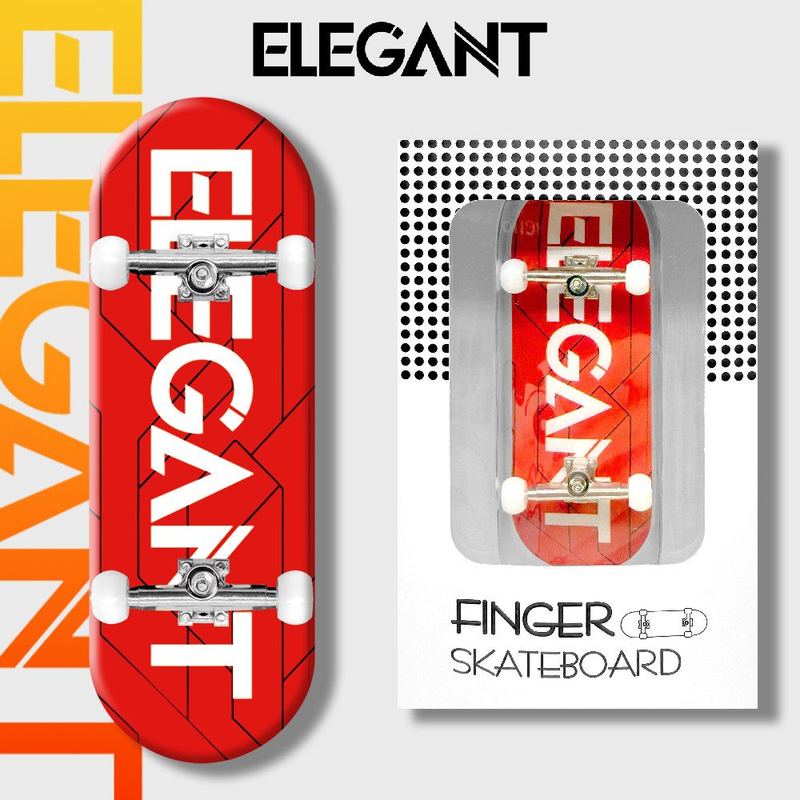
34mm Pro Fingerboard Complete — 5-Ply Maple, Deep Concave
What Concave Actually Is
Concave refers to the curve pressed into a deck across its width, from rail to rail, rather than along its length. Picture the deck as a shallow trough: the center sits slightly lower than the two edges, which gives your fingers a physical edge to catch during flip tricks and a groove to sit in during grinds and manuals.
Concave is separate from kick, which is the upward curve at the nose and tail along the deck's length. A deck's concave and kick are shaped together in the mold, but they solve different problems: kick helps you pop and flip, concave helps you control and catch.
Low Concave: Flat and Fast
Low concave decks have a shallow, subtle curve that feels closer to a flat board. Because there is less curve to work against, low concave decks tend to feel faster and more direct for flip tricks, which is why many technical riders who prioritize speed and precision over lock-in gravitate toward it.
The tradeoff is control. With less of a physical edge to catch, low concave rewards riders who already have consistent finger placement, and it can feel slippery or hard to hold onto for anyone still building that consistency.
Medium Concave: The Balanced Default
Medium concave sits between the two extremes and is the most common concave level on production decks for good reason. It gives you enough of a groove to catch flips confidently and hold a line through grinds and manuals, without slowing down flip speed the way a deep concave can.
Most riders, regardless of skill level, are well served by medium concave. It is the safest choice if you are buying a single deck and are not yet sure which direction your riding style will lean.
High Concave: Maximum Lock-In
High concave decks have a deep, pronounced curve that gives your fingers a strong, secure edge to hold onto. This makes catching flips and holding tricky grinds or manuals noticeably easier, which is why high concave is often recommended to beginners who are still developing consistent finger control.
The deeper curve does add a bit more resistance to how quickly a deck rotates during flips, so some advanced technical riders find it feels slower than a low or medium concave deck once their control is already dialed in.
How to Choose Your Concave
If you are new to fingerboarding, start with medium or high concave; the extra grip makes early tricks like ollies and kickflips easier to catch consistently. If you already ride and want faster, more technical flip combos, try stepping down to low or medium concave and see if the reduced resistance suits your style.
Concave preference is highly personal and often changes as your control improves, so treat your first deck's concave as a starting point rather than a permanent choice.
Fingerboard Concave Levels
| Concave Level | Feel | Best For |
|---|---|---|
| Low | Flat, fast, less resistance | Technical riders chasing flip speed |
| Medium | Balanced grip and speed | Most riders; the safe default choice |
| High | Deep, secure, locked-in grip | Beginners and control-focused riders |
Frequently asked questions
What is fingerboard concave?+
Concave is the curve pressed across the width of a deck, from rail to rail, giving your fingers an edge to catch during flips and a groove to hold during grinds and manuals.
Is high or low concave better for beginners?+
High or medium concave is generally easier for beginners because the deeper curve gives your fingers more to hold onto while you are still building consistent control.
Does concave affect flip speed?+
Yes. Lower concave decks generally feel faster to flip because there is less curve to rotate through, while higher concave adds a bit more resistance in exchange for a more secure catch.
What concave do most pro-style fingerboard decks use?+
Medium concave is the most common choice on production decks because it balances catchability with flip speed, making it suitable for the widest range of riders.
Is concave the same as kick?+
No. Concave is the curve across the deck's width, while kick is the upward curve at the nose and tail along the deck's length. They work together but affect different parts of your riding.
Can I feel the difference between concave levels?+
Yes, concave is one of the most noticeable feel differences between decks, often more noticeable than deck width once you have ridden a few different boards.
Ready to build?
Shop precision completes, decks, molds, and hardware from the Lab.