Best Fingerboard Setup for Beginners: Complete Buying Guide
The best beginner fingerboard setup is a 32-34mm wooden complete with medium concave, medium bushings, and foam grip tape, since this combination is forgiving to learn on without limiting how far you can progress. A complete setup is the simplest way to start because every part is already matched and ready to ride, rather than requiring you to research compatibility yourself. Buy a real wooden complete over a plastic toy if your goal is to actually learn tricks, since the wood, metal, and urethane components behave far more like a genuine skateboard.
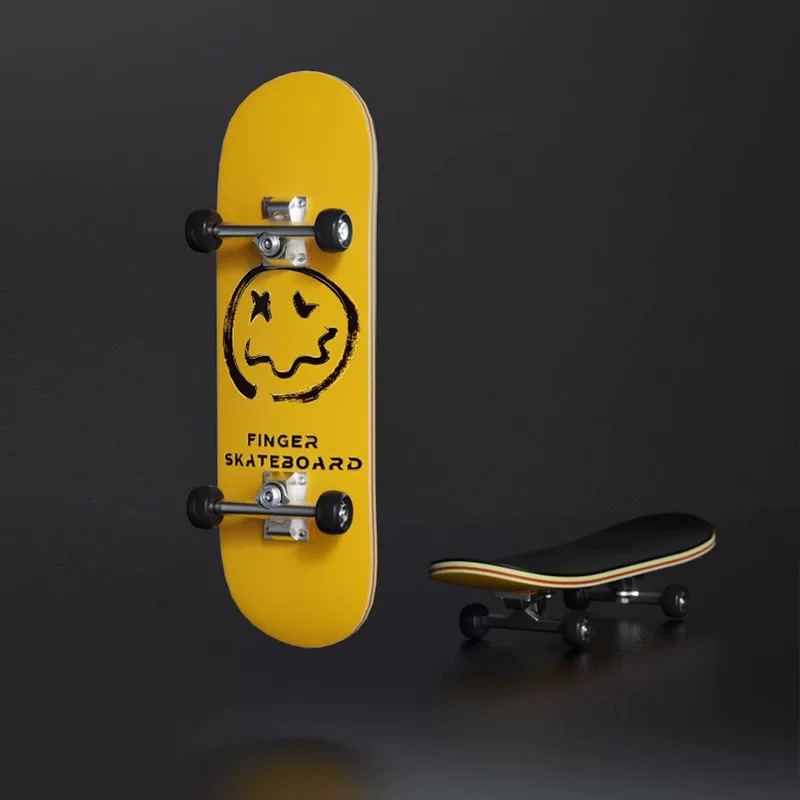
Maple & Alloy Fingerboard Complete — Bearing Trucks, 2-Pack
Why a Complete Setup Makes Sense to Start
A complete setup pairs a deck, trucks, wheels, and grip tape that are already sized to work together, which removes the biggest risk for a first purchase: buying mismatched parts. Building your own setup piece by piece gives you more control over the exact feel, but it requires already knowing how truck width should match deck width and what bushing durometer you want.
Start with a complete, ride it enough to understand what you like and do not like about it, then move to a build-your-own approach once you have opinions about specific components worth changing.
Deck: 32-34mm Wood
A wooden deck in the 32-34mm range is the standard beginner recommendation. It is wide enough to catch and land flip tricks confidently while still being narrow enough to flip quickly, and 34mm specifically is the most versatile width if you plan to keep riding the same deck as you improve.
Avoid plastic toy-style decks if your goal is to actually learn technique. Wood gives you real pop and flex, which is the foundation every other part of the setup depends on.
Concave: Medium
Medium concave is the safest starting point because it gives your fingers enough of an edge to catch flips consistently without being so deep that it feels slow. Some beginners do well with a bit more concave for extra grip while they are still building consistent finger placement, but medium remains the most broadly recommended default.
You do not need to overthink this choice on a first setup. Concave preference tends to sharpen only after you have ridden a few boards and can feel the difference for yourself.
Bushings: Medium
Medium bushings, generally in the 70-75A durometer range, are the right starting point because they turn naturally without feeling loose or unpredictable. Very soft bushings can feel unstable before you have built control, and very hard bushings can feel stiff and unresponsive while you are still learning basic tricks.
As you progress and develop preferences, swapping bushings is one of the cheapest and easiest ways to change how a setup feels without replacing the whole truck.
Grip Tape: Foam Over Sandpaper Texture
Foam grip tape, sometimes called prohibition-style tape, is preferred by most riders over a sandpaper-style texture because it grips fingers securely and comfortably without being abrasive during longer sessions. Many complete setups now ship with foam tape by default for this reason.
If your complete comes with a rougher, sandpaper-style grip, switching to foam tape is a simple, inexpensive upgrade that noticeably changes how comfortable long sessions feel.
Where to Actually Ride It
Fingerboarding is designed around desk-scale riding: a flat, hard, obstacle-free surface like a desk or tabletop, with the edge of a book, phone case, or dedicated fingerboard obstacle acting as a ledge to grind or manual on. You do not need a park or ramps to practice the fundamentals.
A clean, flat surface is genuinely one of the most important pieces of your setup beyond the board itself, since inconsistent surfaces make flip tricks and rolling far harder to learn than they need to be.
Frequently asked questions
What is the best fingerboard setup for a beginner?+
A 32-34mm wooden complete with medium concave, medium bushings around 70-75A durometer, and foam grip tape is the best all-around beginner setup, since it is forgiving to learn on without limiting your progress later.
Should a beginner buy a complete or build their own fingerboard?+
Start with a complete setup. It guarantees the parts are already matched and ready to ride, which removes the risk of buying incompatible components before you know what you are looking for.
What deck width should a beginner start with?+
32-34mm is the standard beginner recommendation. 34mm in particular is worth considering first since it remains useful and versatile well past the beginner stage.
Is foam grip tape better than sandpaper-style grip tape?+
Most riders prefer foam grip tape because it grips securely without being abrasive to the fingers over long sessions, and many complete setups now include foam tape by default.
Do I need a fingerboard ramp or park to practice?+
No. A flat, hard, obstacle-free surface like a desk or table is enough to practice the fundamentals, with everyday objects like a book edge serving as a simple ledge.
How much should a beginner spend on their first fingerboard?+
Spend enough to get a real wooden complete with metal trucks and urethane wheels rather than a plastic toy, since the material quality is what determines whether you can actually learn technique on it.
Ready to build?
Shop precision completes, decks, molds, and hardware from the Lab.