Fingerboard vs Tech Deck: What's Actually Different (2026)
A Tech Deck is a mass-market plastic toy built for casual play, while a performance fingerboard is a real, tunable miniature skateboard built from wood, metal, and urethane. The core difference is that fingerboards replicate the mechanics of full-size skateboarding, including grip tape, bushings, and rolling wheels, while Tech Decks approximate the look with fixed plastic parts and no real tuning. If you want to actually learn tricks with realistic feel, a wooden fingerboard performs meaningfully better than a Tech Deck; if you want an affordable, durable toy to collect or casually flick around, a Tech Deck does that job well.
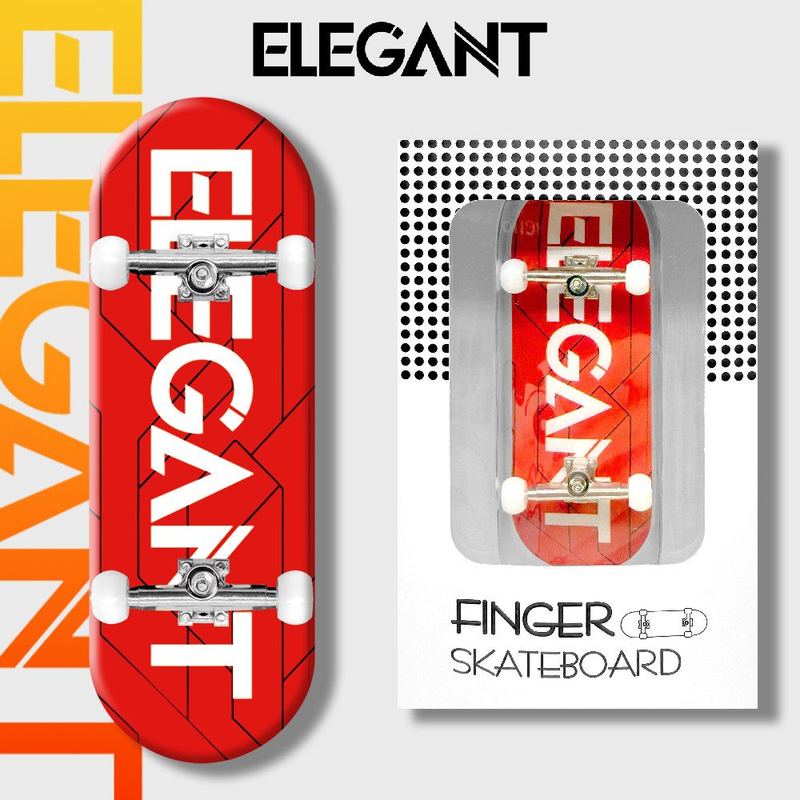
34mm Pro Fingerboard Complete — 5-Ply Maple, Deep Concave
Deck Material: Wood vs Plastic
Performance fingerboard decks are built from pressed wood veneer, typically 5 plies of maple, laminated and molded into a concave shape the same way a full-size skateboard deck is made, just at a fraction of the scale. This gives the deck genuine pop and flex.
Tech Deck decks are molded plastic. Plastic is cheap to mass-produce and extremely durable against drops and mishandling, but it cannot replicate the flex and responsive pop of a laminated wood deck, which is the main reason plastic decks feel noticeably different under the fingers.
Trucks and Bushings
Fingerboard trucks built for performance are metal, use a real kingpin-and-bushing setup, and are designed to be tuned for tightness the same way full-size skateboard trucks are. This is what allows realistic-feeling grinds and controllable turning.
Tech Deck trucks are plastic and fixed. There is no meaningful tuning available, and the turning feel is a simplified approximation rather than a functional mechanical system, which is fine for casual play but limits how precisely you can control the board.
Wheels: Urethane vs Hard Plastic
Performance fingerboard wheels are urethane and mounted on small bearings, which lets them roll smoothly and grip the riding surface, closely mirroring how full-size skateboard wheels behave. This matters for manuals, rolling tricks, and consistent grinds.
Tech Deck wheels are hard plastic without bearings. They roll less smoothly and are more prone to skidding, which is a noticeable difference if you try manuals or rolling transitions between tricks.
Grip and Feel
Performance fingerboards use real grip tape, most often foam-based tape rather than a sandpaper-style texture, which grips fingers securely without being abrasive over long riding sessions. This is a deliberate tuning choice separate from the deck itself.
Tech Decks use a printed or molded texture on the deck surface rather than applied grip tape. It looks similar from a distance but does not function the same way, and it cannot be swapped or replaced the way real grip tape can.
Price and Purpose
Tech Decks are priced as toys: inexpensive, widely available, and designed for casual, low-commitment play or collecting. Performance fingerboards cost more because each component, deck, trucks, bushings, and wheels, is built and tuned as a functional part of a real setup.
Neither product is objectively wrong to buy; they are built for different goals. A Tech Deck is a toy that resembles a skateboard, while a performance fingerboard is a genuinely rideable miniature skateboard.
Fingerboard vs Tech Deck Comparison
| Feature | Performance Fingerboard | Tech Deck |
|---|---|---|
| Deck material | Pressed wood veneer, usually 5-ply maple | Molded plastic |
| Trucks | Metal, tunable kingpin and bushings | Plastic, fixed, not tunable |
| Wheels | Urethane on small bearings | Hard plastic, no bearings |
| Grip | Real grip tape, often foam-based | Printed or molded texture |
| Tuning | Fully adjustable turning and tightness | None; fixed feel out of the package |
| Price | Higher, reflects real functional parts | Low, priced as a mass-market toy |
| Feel | Realistic pop, roll, and grind | Simplified approximation of skating |
Frequently asked questions
Is a fingerboard the same as a Tech Deck?+
No. Tech Deck is a mass-market plastic toy, while a performance fingerboard is built from real wood, metal, and urethane components designed to be tuned and ridden like a genuine miniature skateboard.
Can you do real tricks on a Tech Deck?+
You can approximate basic tricks, but the plastic construction and fixed trucks limit precision compared to a tuned wooden fingerboard, especially for grinds, manuals, and technical flip combos.
Why are fingerboards more expensive than Tech Decks?+
Fingerboards use functional components, pressed wood decks, metal trucks with real bushings, and urethane wheels on bearings, that cost more to produce than the molded plastic parts used in a Tech Deck.
Do Tech Decks and fingerboards use the same size decks?+
Not necessarily. Tech Decks and performance fingerboards can overlap in width, but performance decks are typically sold in more precise, tunable size ranges like 32mm and 34mm.
Which is better for beginners, a Tech Deck or a fingerboard?+
If you want to seriously learn fingerboarding technique, a wooden fingerboard is the better investment since it behaves like a real skateboard. A Tech Deck is a fine casual toy but will not teach the same skills.
Can I upgrade a Tech Deck with real fingerboard parts?+
Generally no, since Tech Deck trucks and mounting hardware are not designed to be compatible with performance fingerboard parts. Building a real setup means starting with a wooden deck designed for it.
Ready to build?
Shop precision completes, decks, molds, and hardware from the Lab.