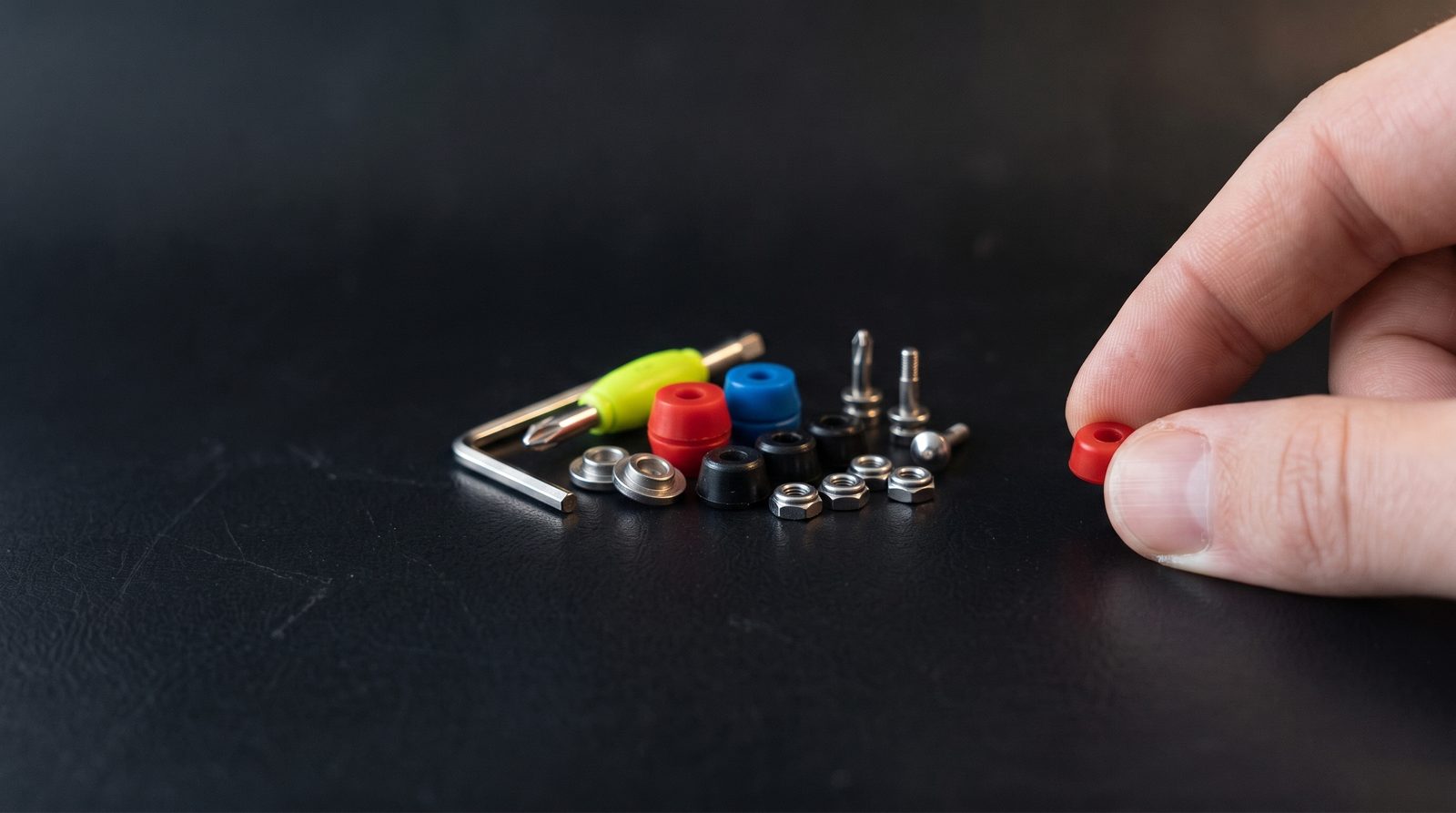
Fingerboard Bushings, Tools & Tuning Hardware
20 products
The smallest fingerboard parts make a disproportionate difference to how a setup feels. Swapping fingerboard bushings changes the turn character of your trucks in minutes; the right fingerboard tool makes every adjustment precise rather than a guess.
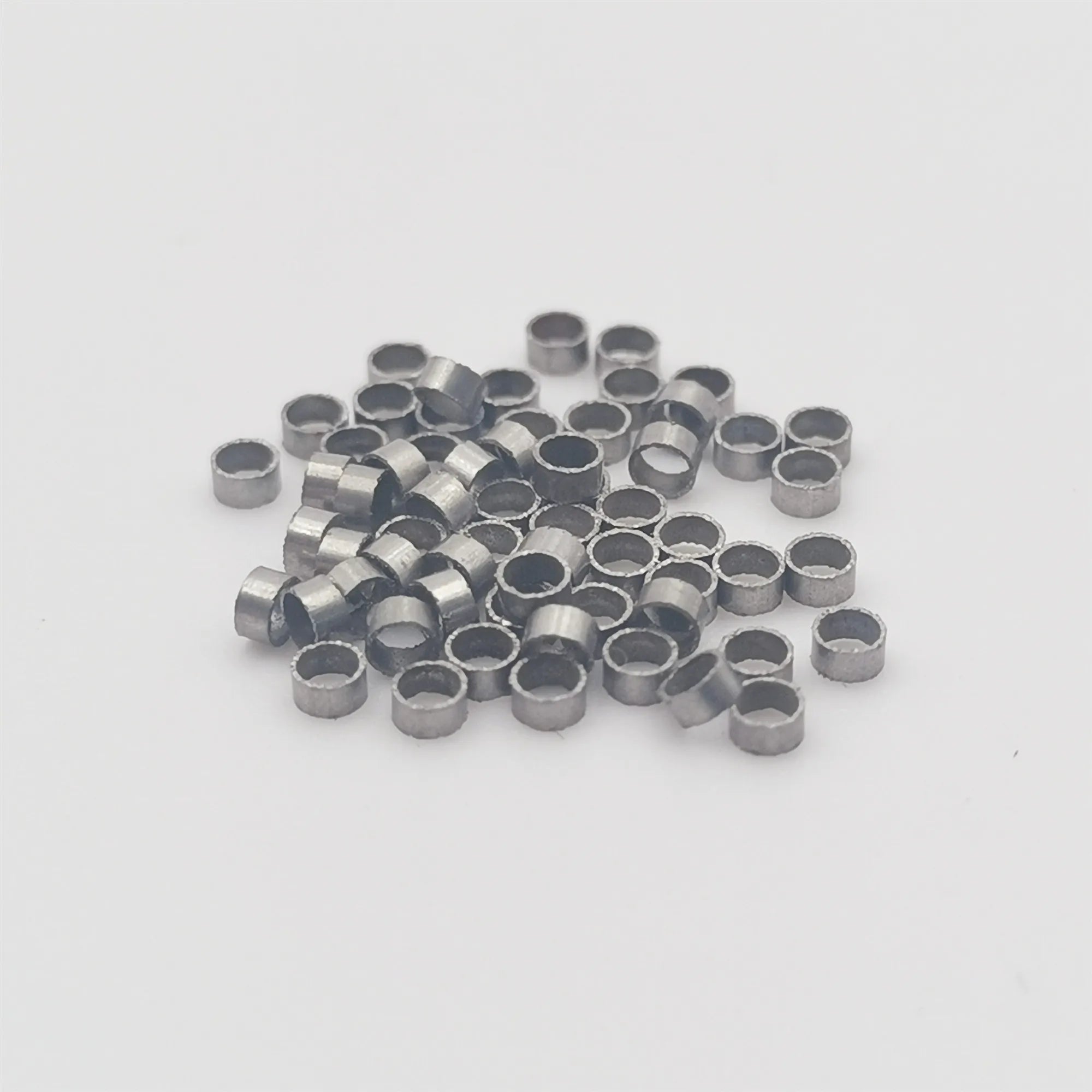
Fingerboard Truck Spacers
In stock$9.95 USD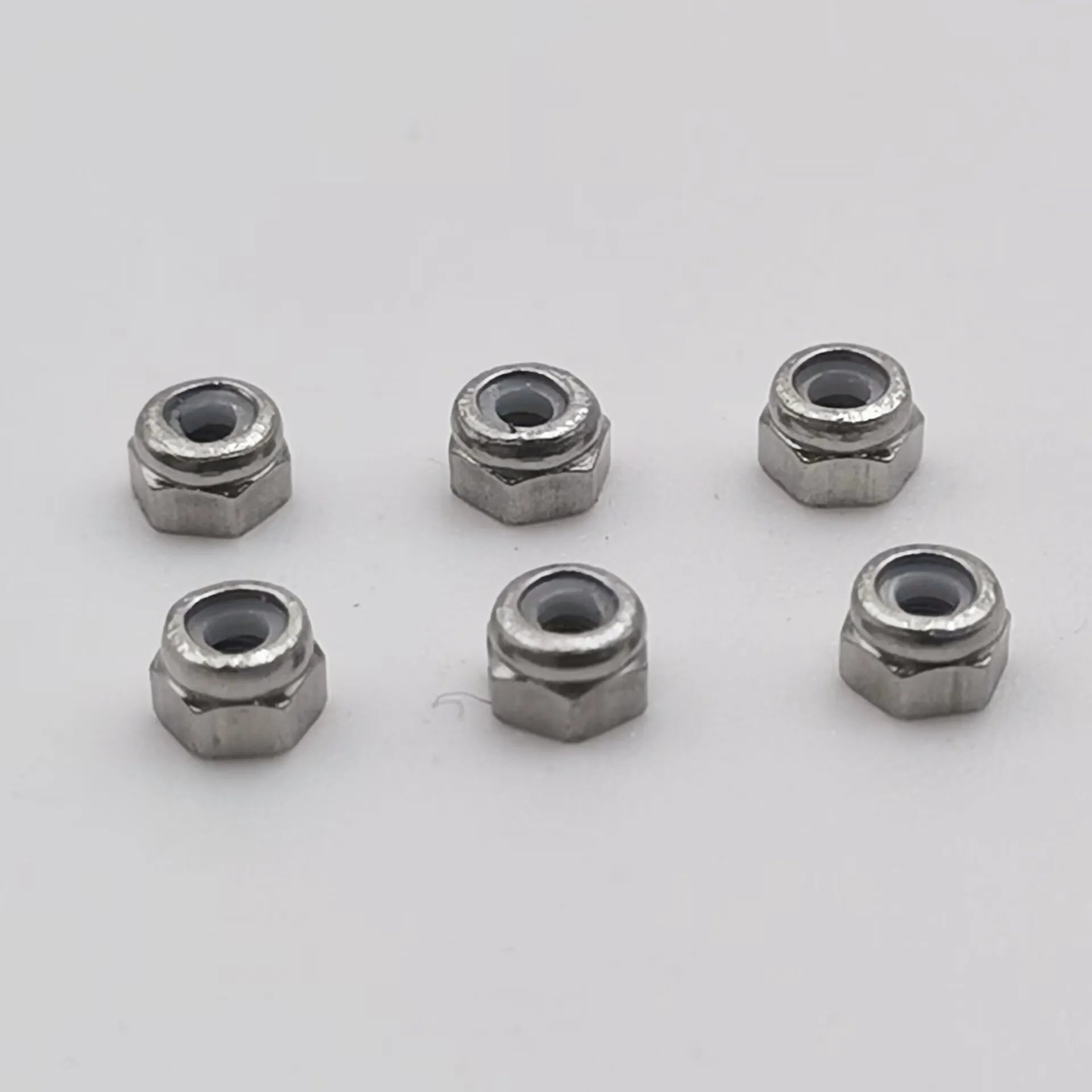
Stainless Steel Fingerboard Locknuts — Set of 6
In stock$11.95 USD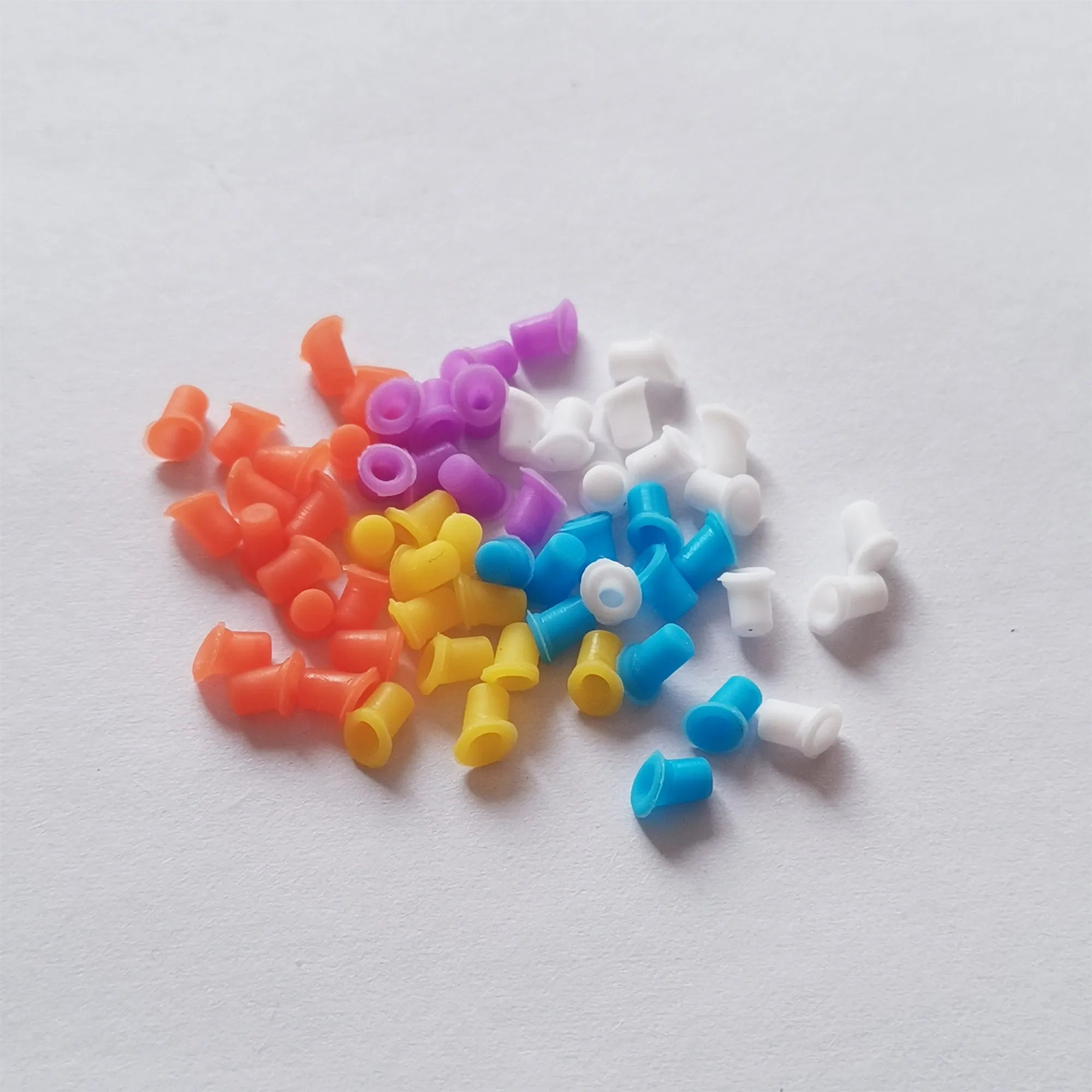
Fingerboard Truck Pivot Cup
In stock$12.95 USD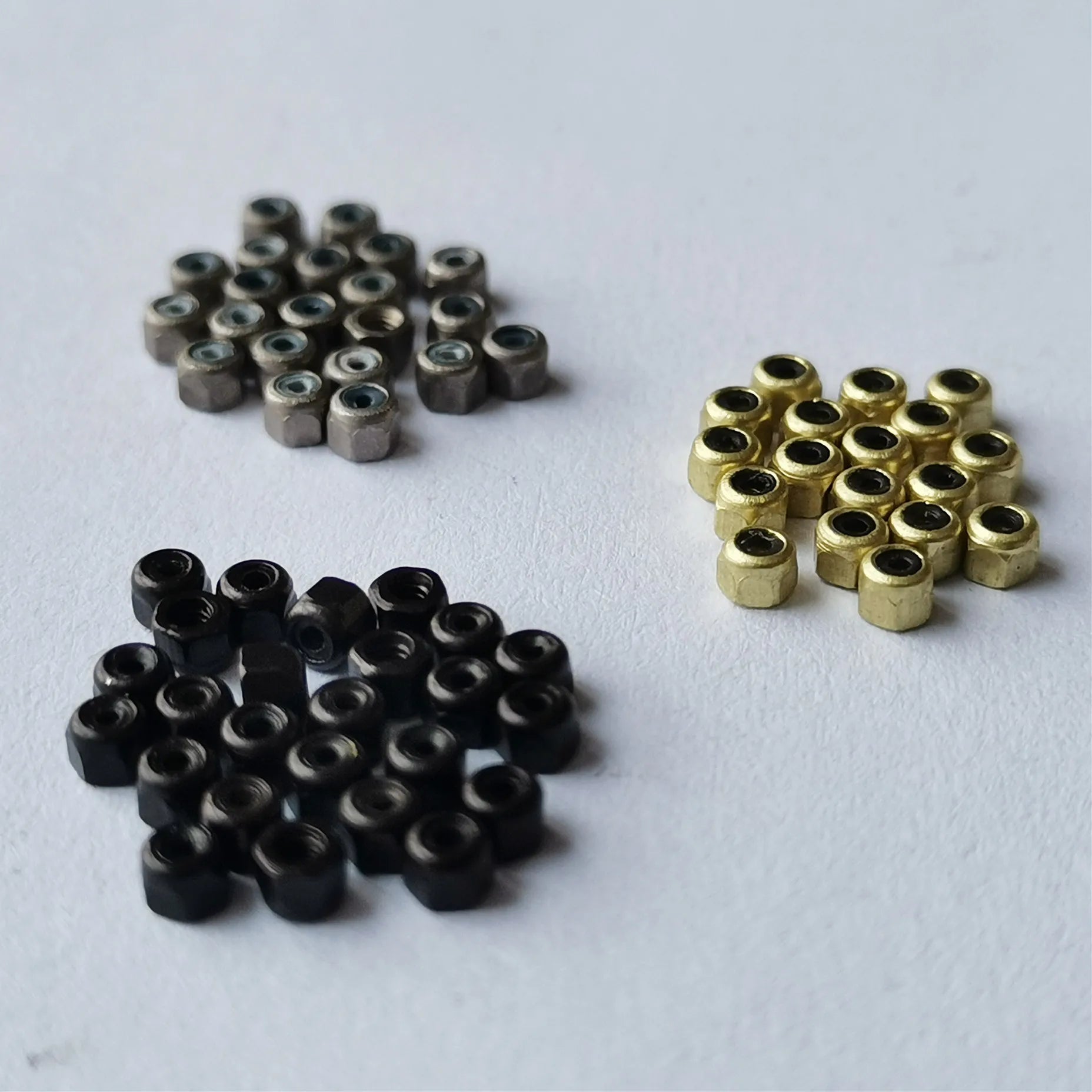
Self-Lock Fingerboard Locknuts — Nylon Insert (Set of 6)
In stock$13.95 USD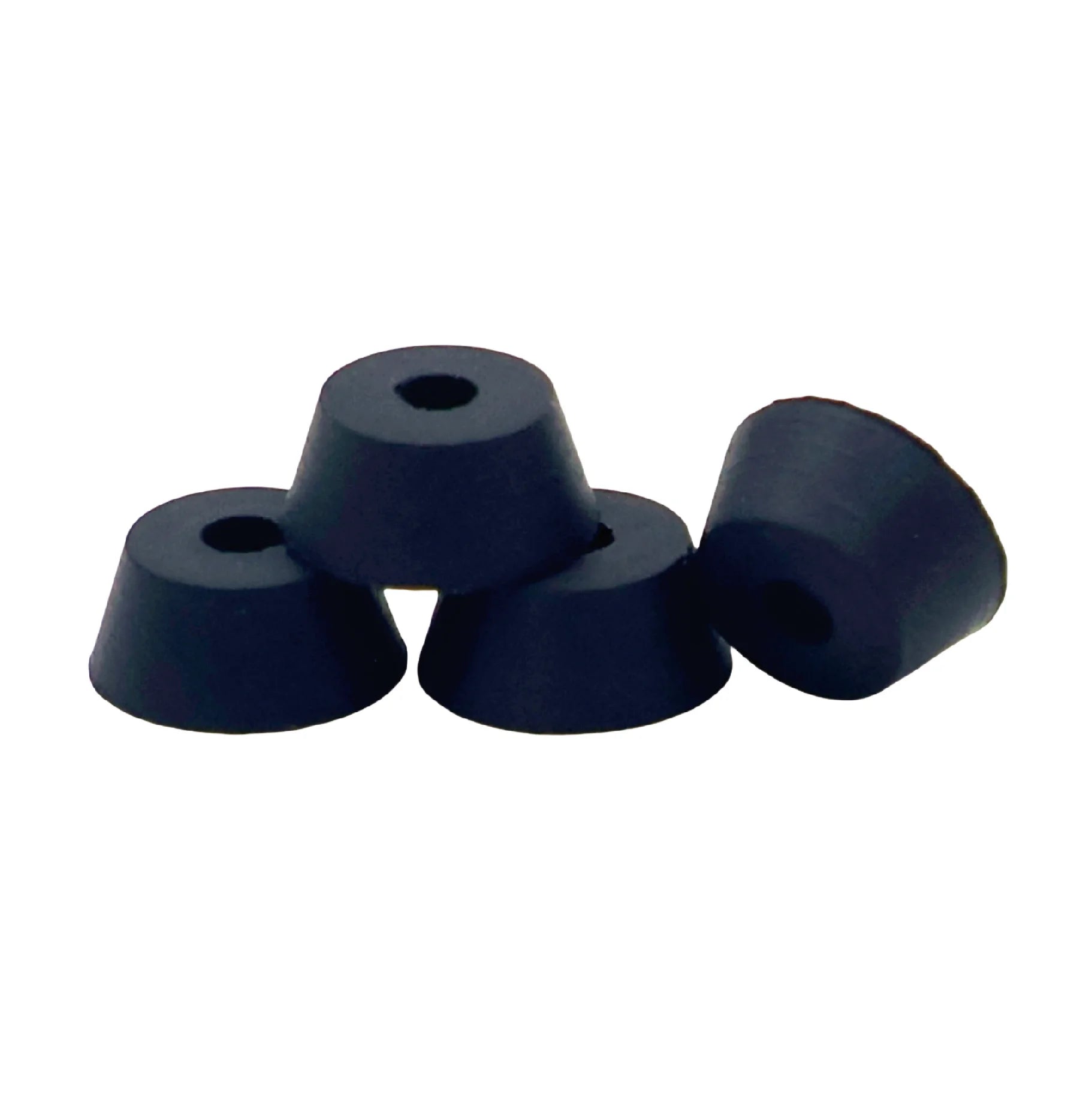
70A Cone Fingerboard Bushings
In stock$14.95 USD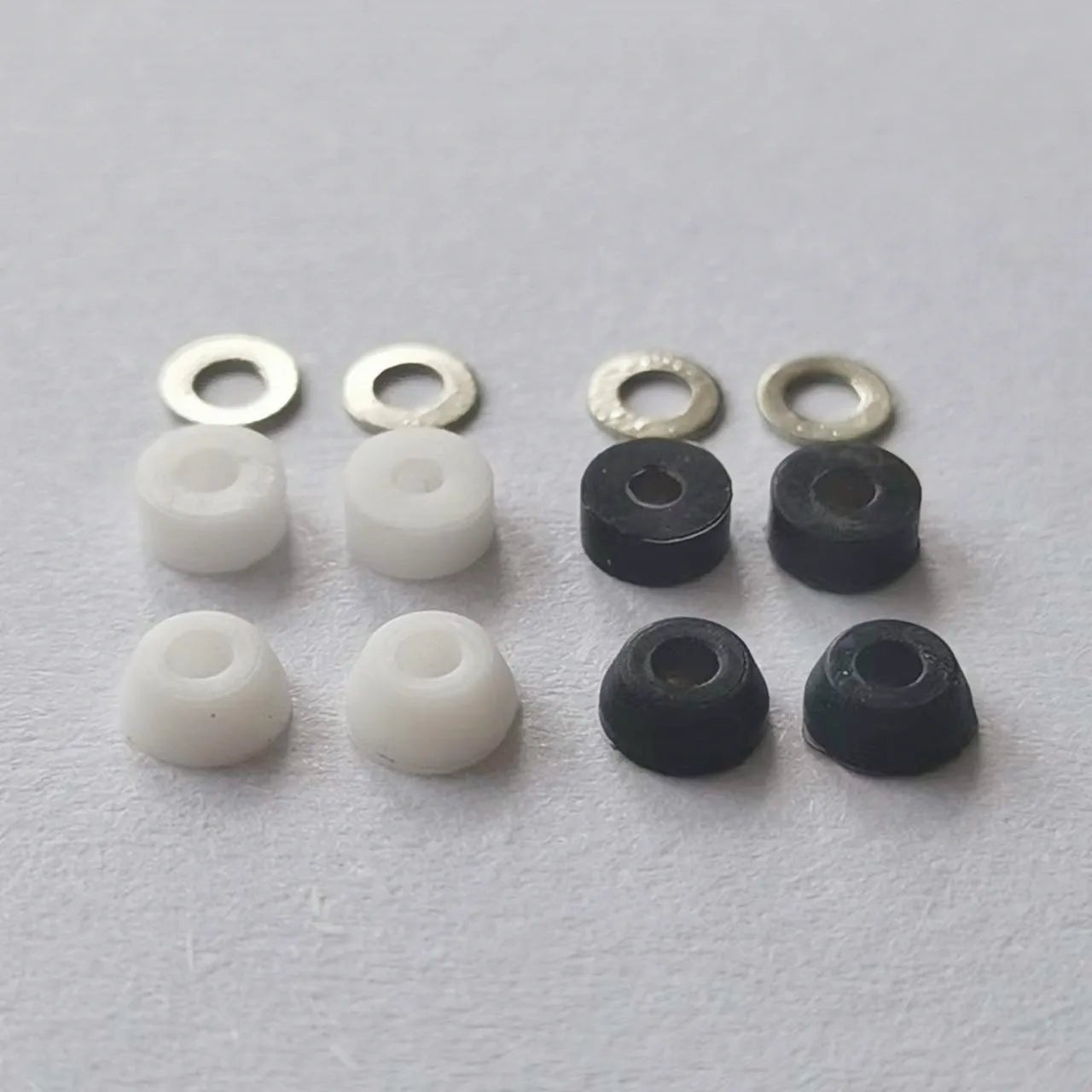
75A PU Fingerboard Bushings — High Elasticity
In stock$16.95 USD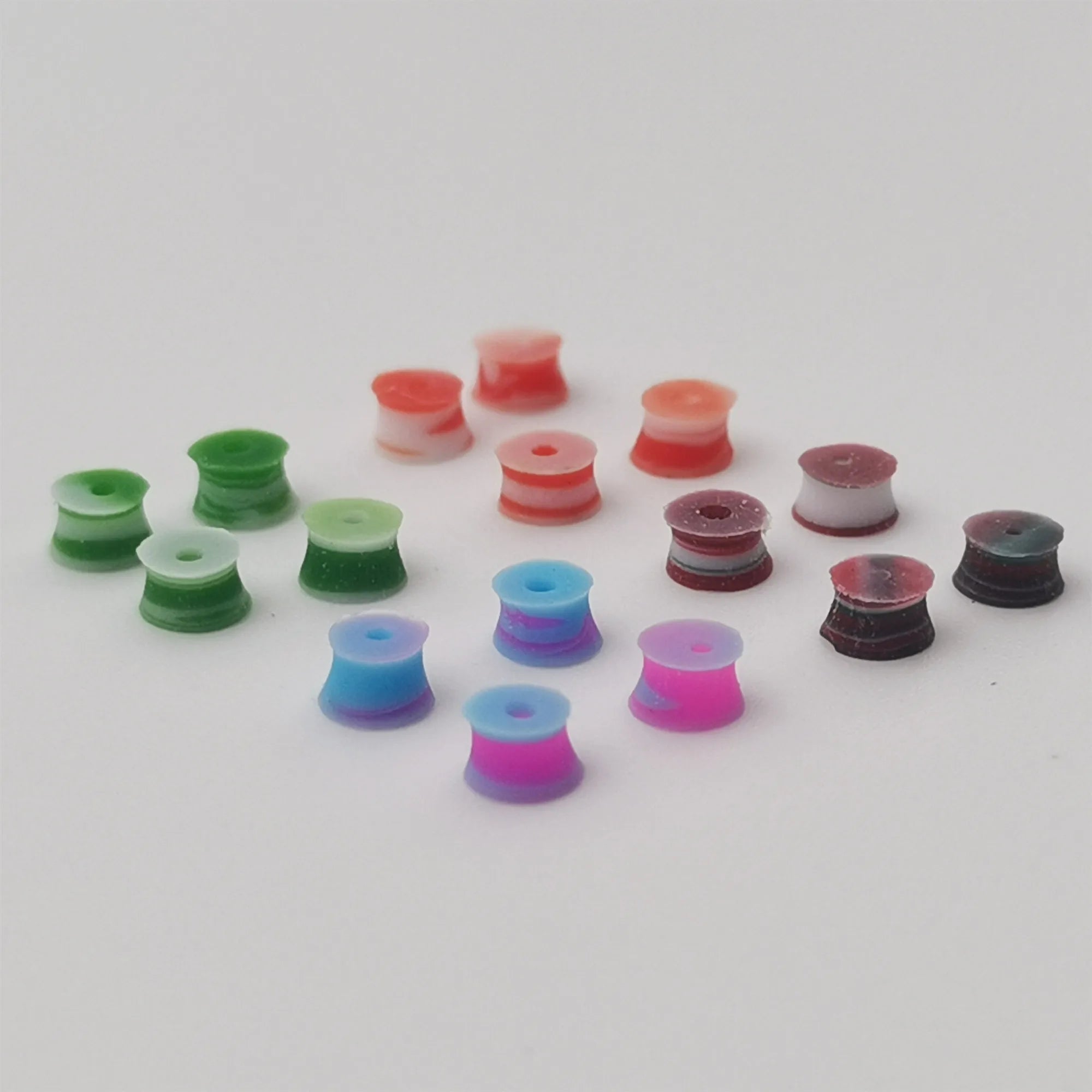
Handmade 75A Fingerboard Bushings
In stock$16.95 USD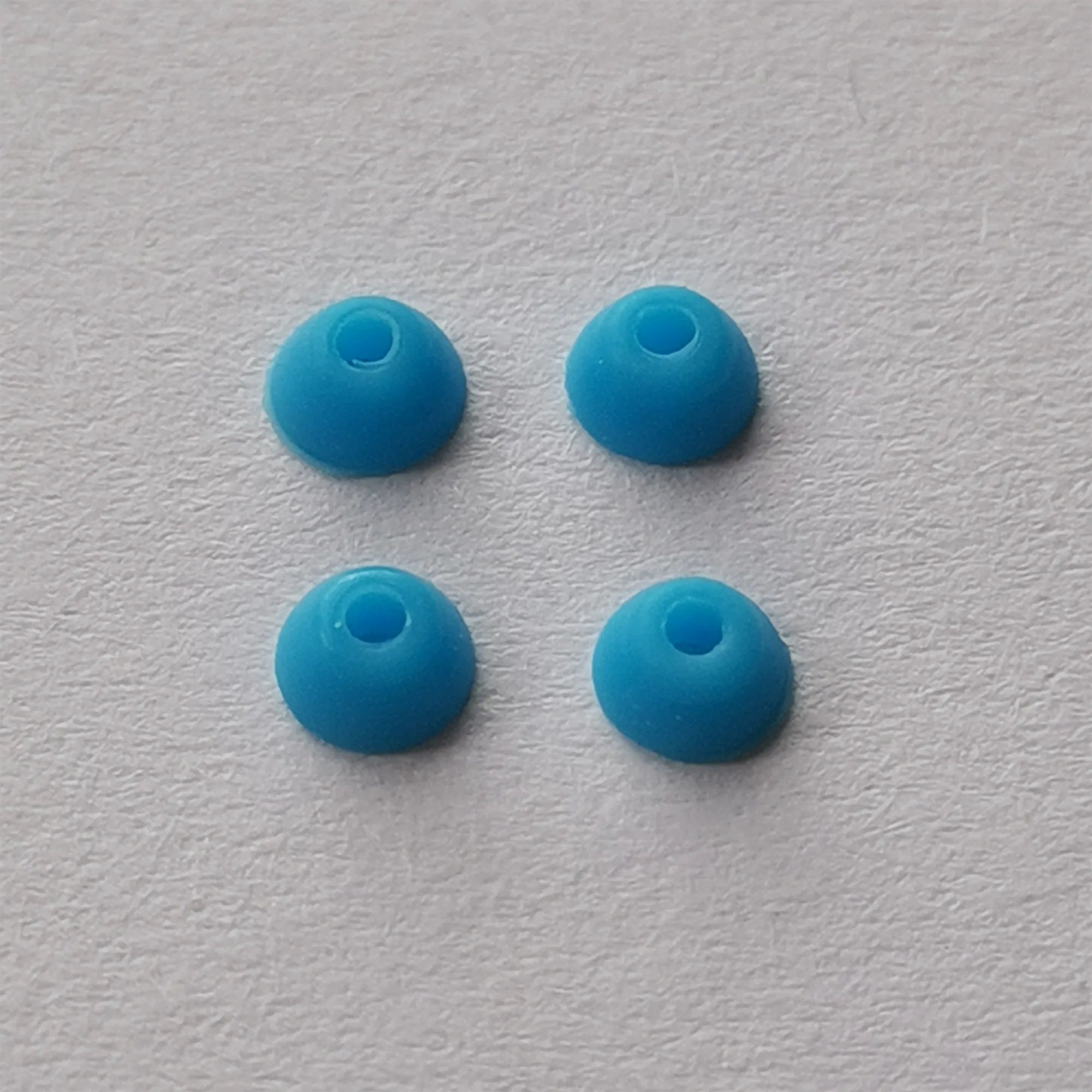
Soft PU Fingerboard Bushings — Coloured Set (12 Pack)
In stock$18.95 USD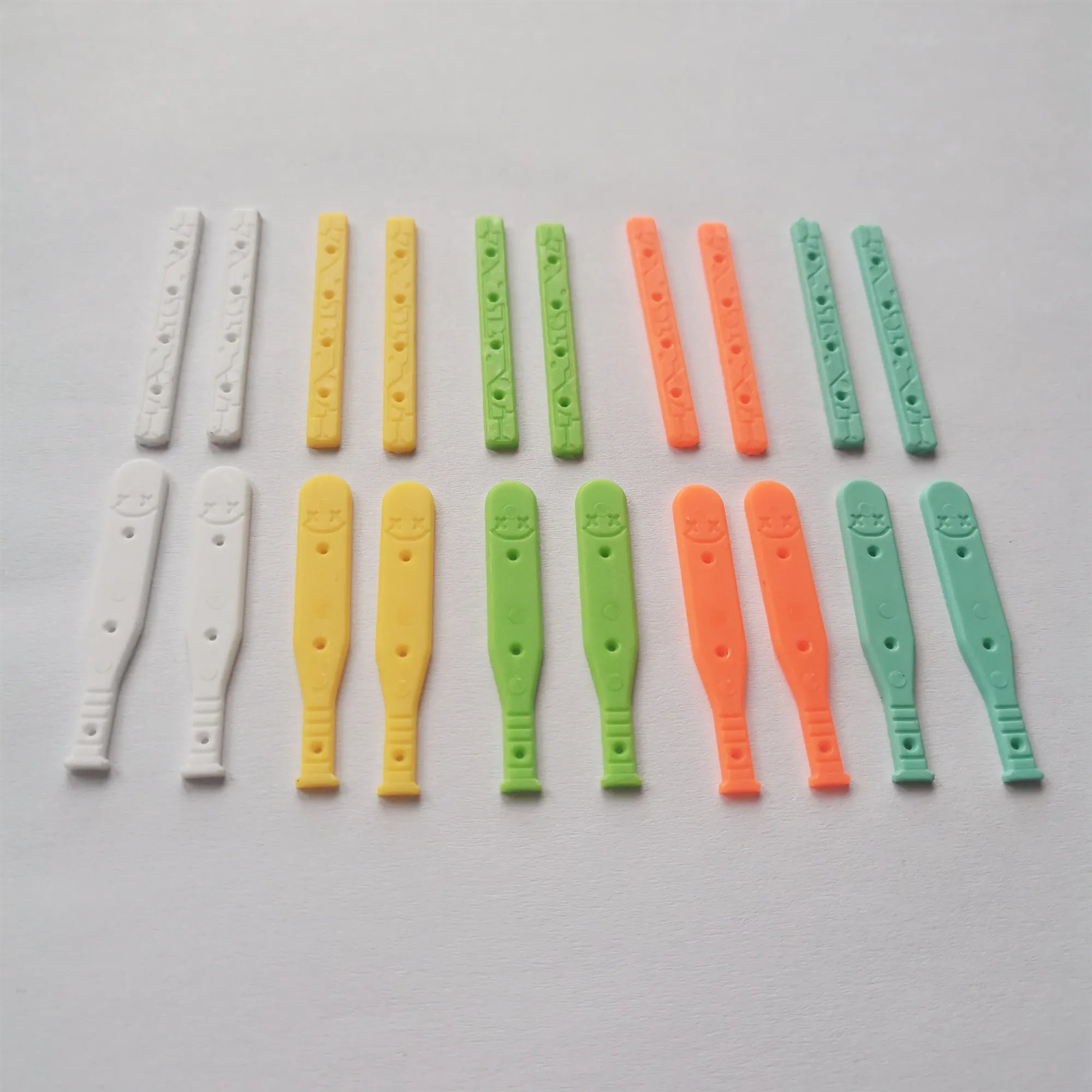
Fingerboard Board Rails
In stock$19.95 USD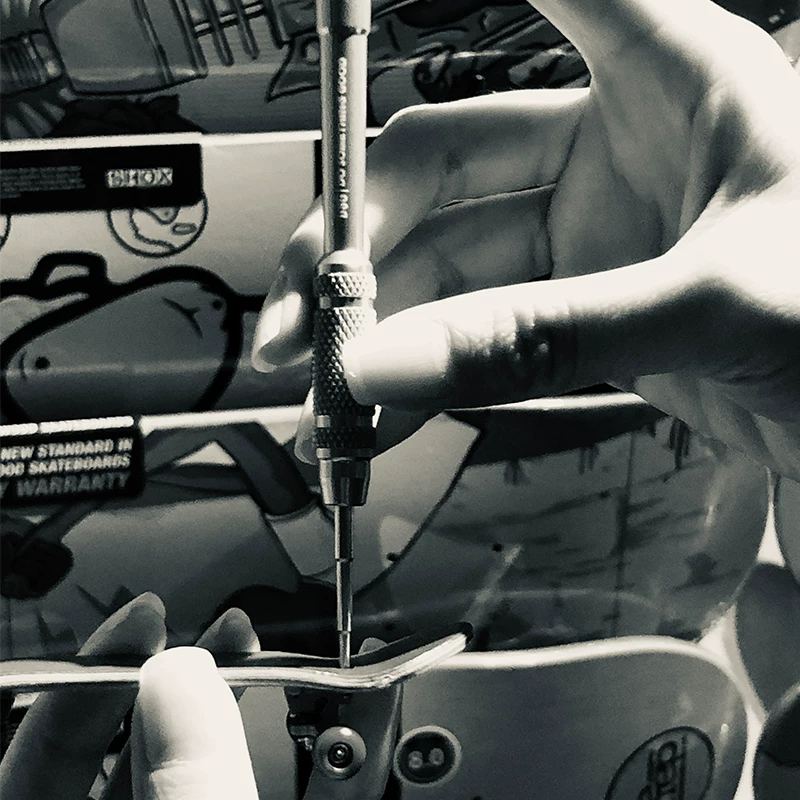
DSG Fingerboard Cross Screwdriver — Truck Maintenance Tool
In stock$19.95 USD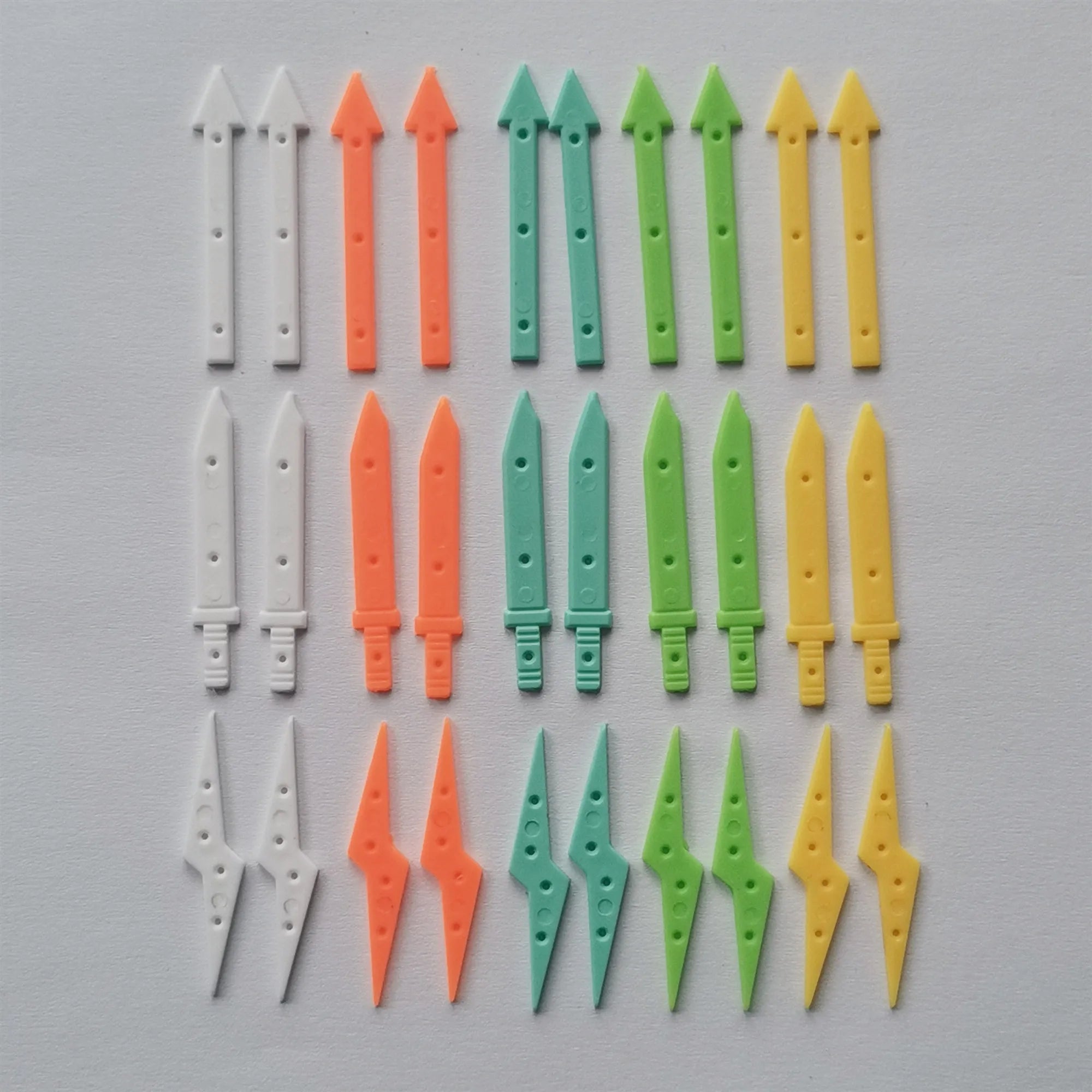
Fingerboard Board Rails with Screws
In stock$19.95 USD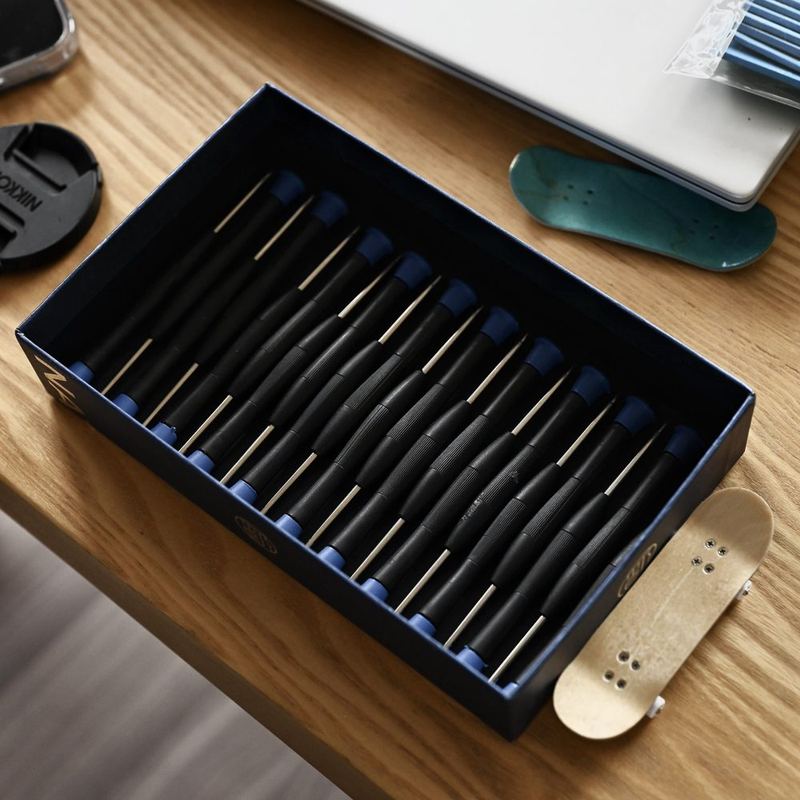
WP Fingerboard Cross Screwdriver Blue — Truck Tool, Pack of 3
In stock$20.95 USD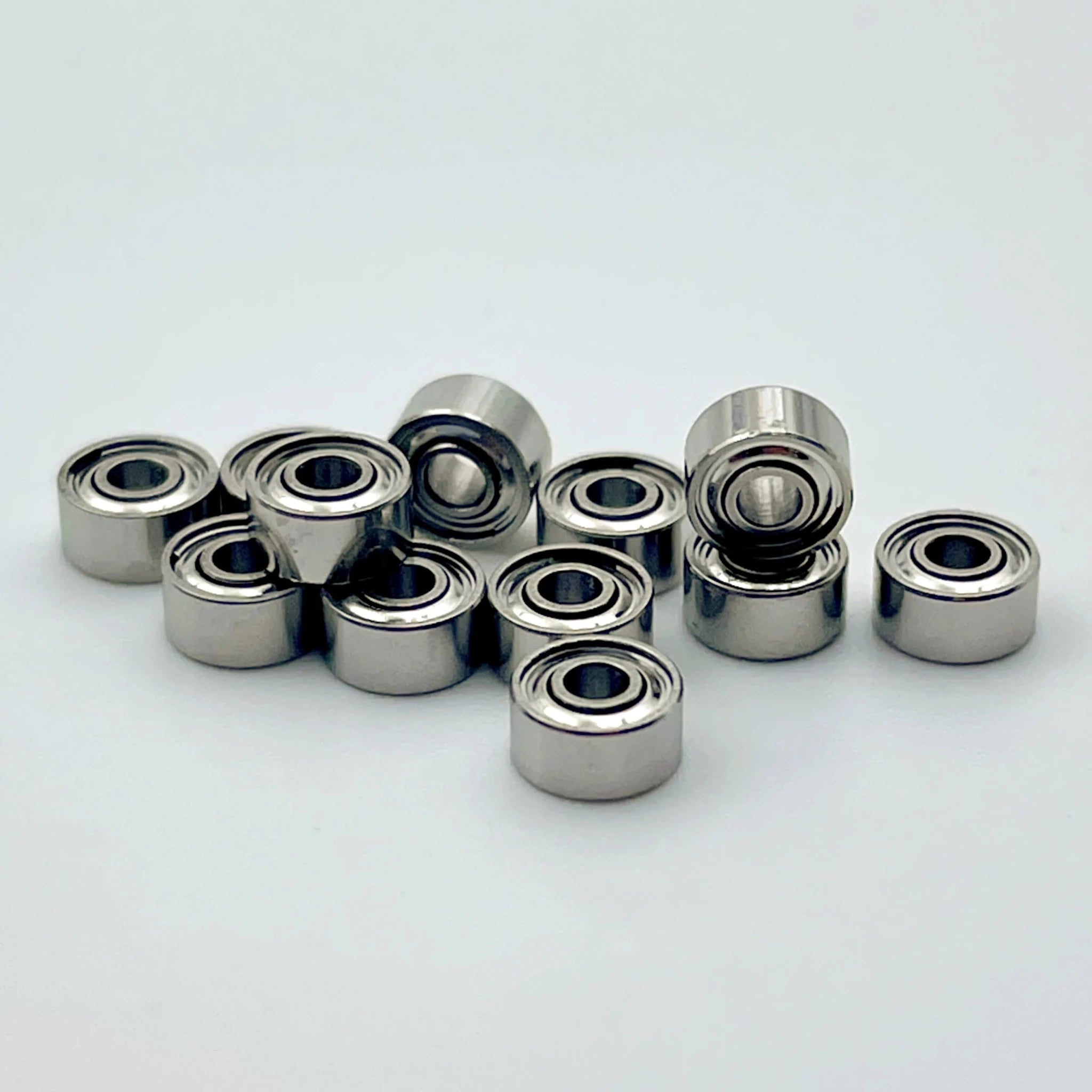
ABEC 7 Fingerboard Wheel Bearings
In stock$21.95 USD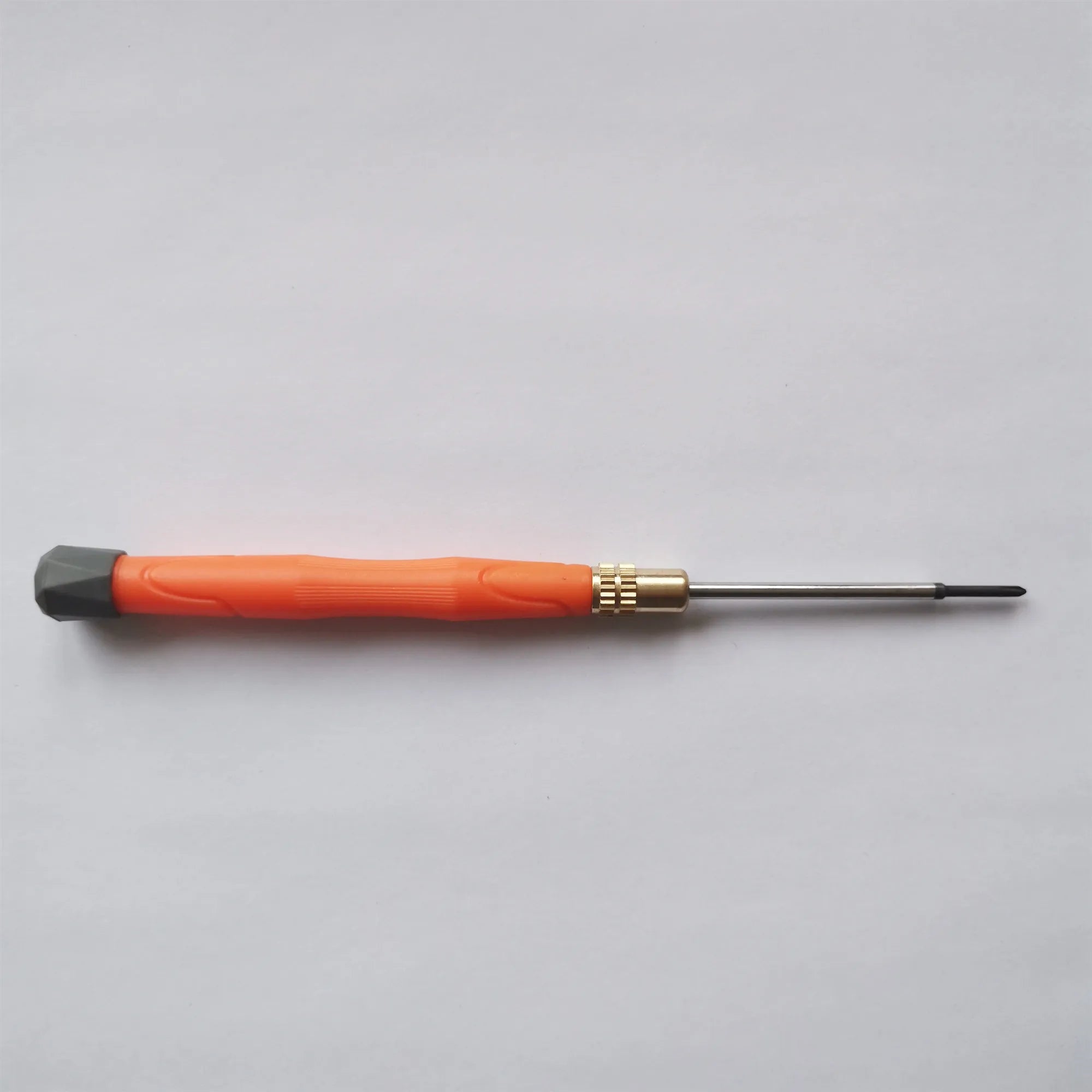
Fingerboard Truck Thread Tool
In stock$22.95 USD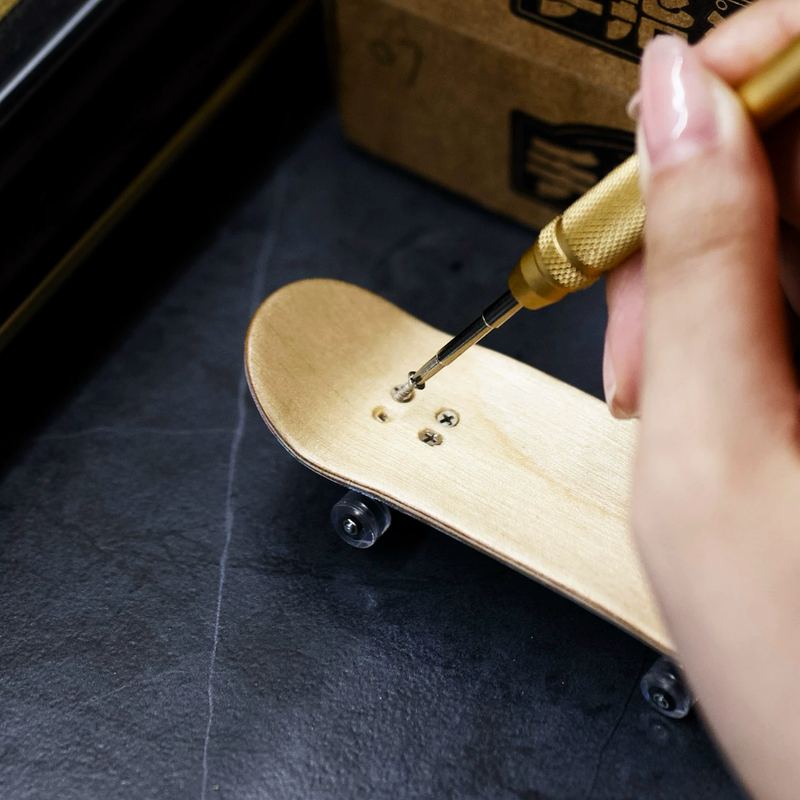
WP Fingerboard Cross Screwdriver — Truck Tool, Pack of 3
In stock$22.95 USD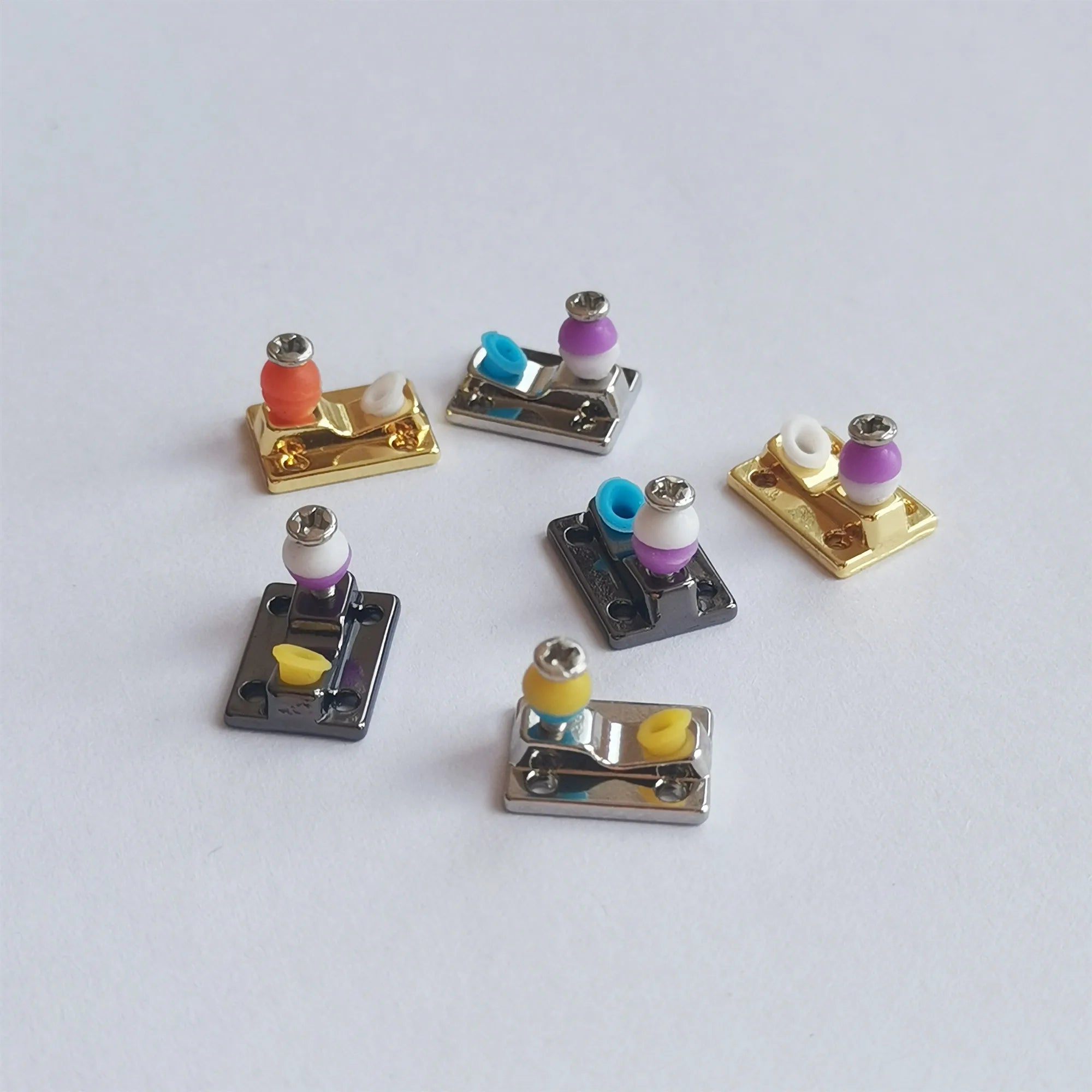
Fingerboard Truck Baseplate
In stock$24.95 USD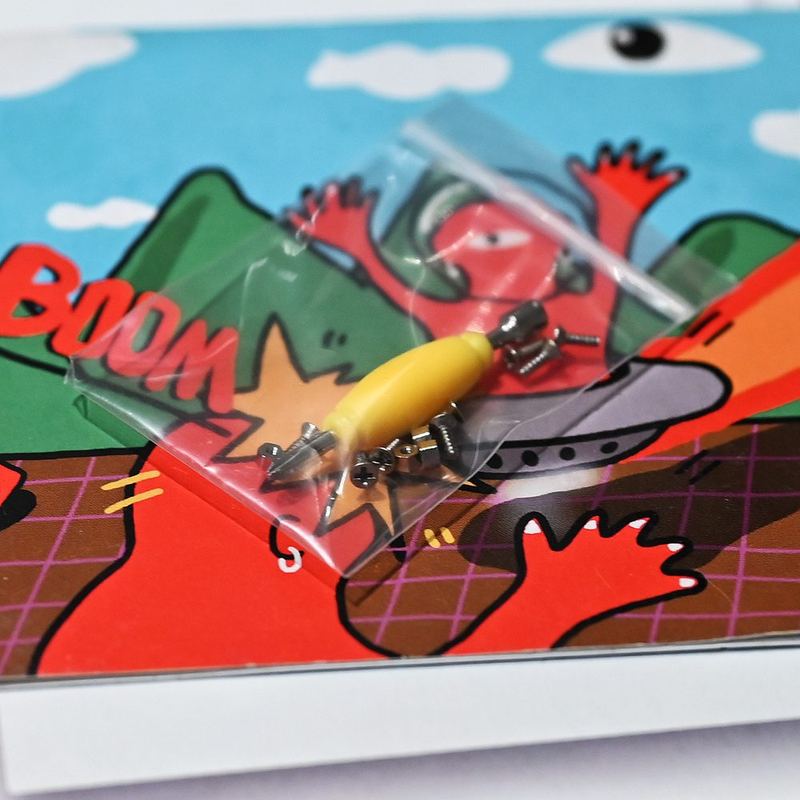
WP Fingerboard Spare Parts Kit — Lock Nuts and Pins, 5-Pack
In stock$24.95 USD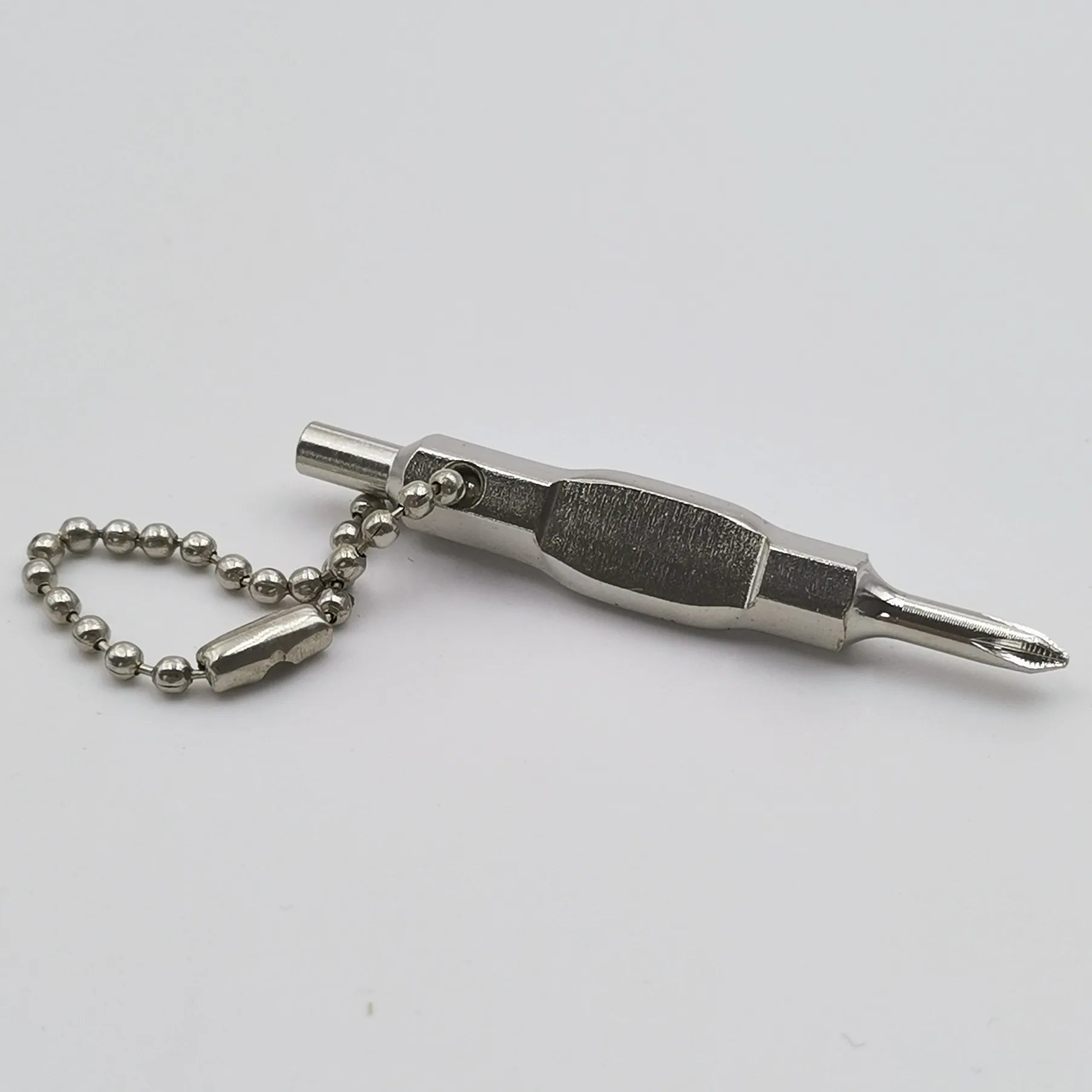
Metal Fingerboard Tool — Screws & Nuts Kit
In stock$29.95 USD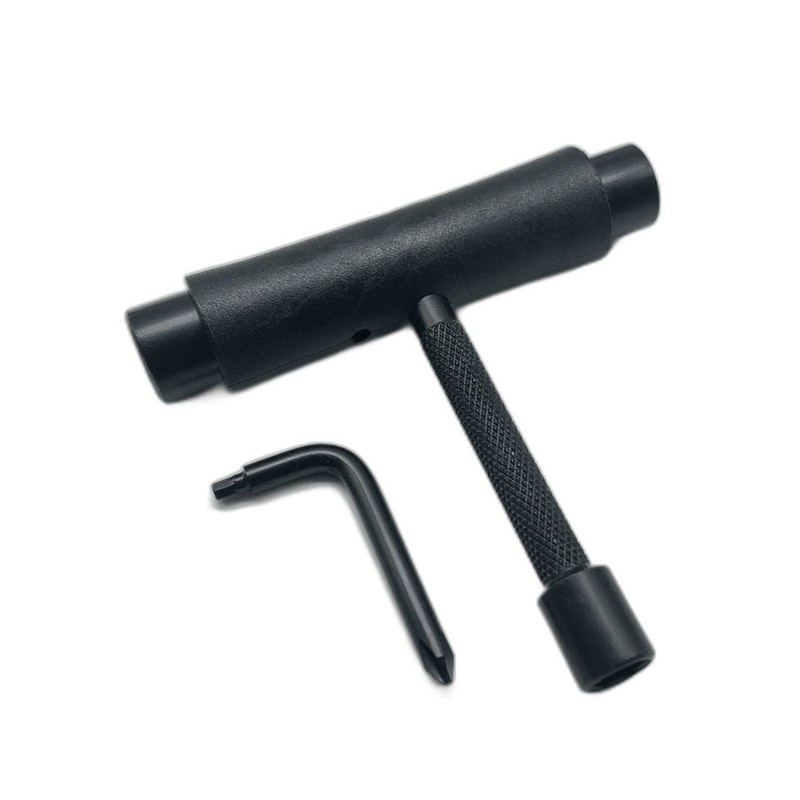
T-Shape Fingerboard Tool — Allen Key & Axle Wrench
In stock$12.95 USD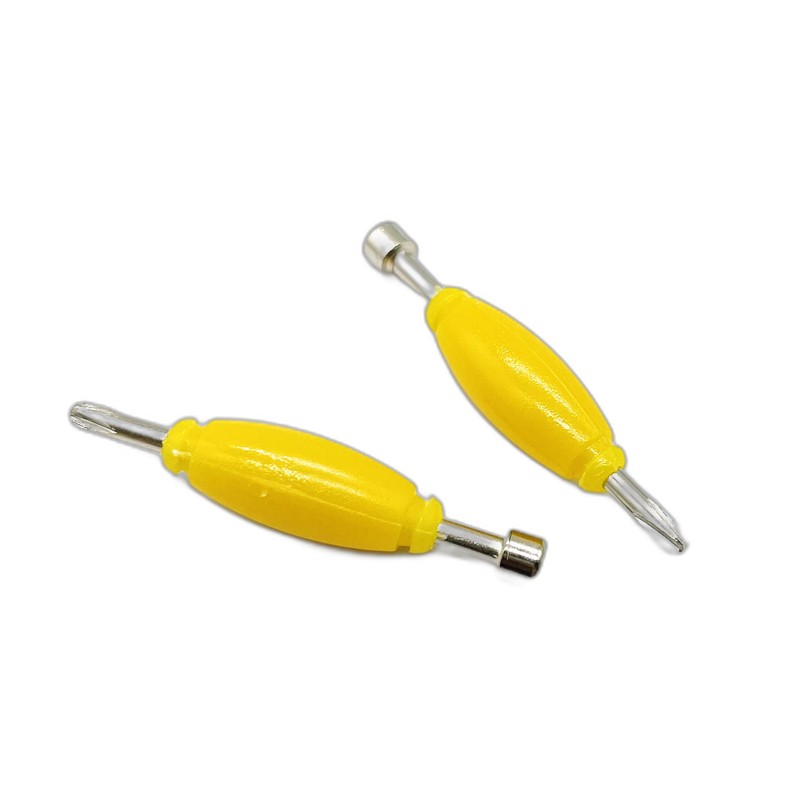
Double-Ended Mini Fingerboard Screwdriver
In stock$7.95 USD
Fingerboard Bushings, Tools & Tuning Hardware: a buying guide
Bushings: durometer explained
Fingerboard bushings control how freely your trucks pivot. A lower durometer like 70A is soft and allows the trucks to turn sharply with little pressure. A higher durometer such as 75A or above resists turning and gives a stiffer, more stable ride. Swapping bushings is the cheapest form of fingerboard tuning available — far less than new trucks and immediately transformative. Keep a few hardnesses in your kit to dial in conditions.
Screws, spacers and pivot cups
Fingerboard screws attach the baseplate to the deck; worn or stripped screws cause trucks to feel loose regardless of how tight the kingpin is. Fingerboard spacers maintain consistent wheel spacing so bearing wheels spin freely without side-to-side play. Pivot cups wear quietly — when the hanger starts to rattle independently of the baseplate, replacing the pivot cup restores the tight, responsive feel of new trucks at a fraction of the cost.
The right fingerboard tool
A proper fingerboard screwdriver or T-tool fits the tiny hardware on pro-spec setups without rounding the heads. Using an undersized flathead is the fastest way to strip a screw that is otherwise fine. A dedicated fingerboard tool costs little and pays for itself the first time it saves a screw. Most tools are double-ended, covering both the kingpin nut and the deck screws.
Fingerboard hardware as a tuning system
Experienced riders treat fingerboard hardware as a set of variables rather than a fixed spec. Bushing hardness, kingpin tension, spacer width and screw torque all interact. A setup that feels stiff might just need softer bushings, not new trucks. Working through these adjustments systematically — kingpin first, then bushings, then hardware — is how riders build a setup that feels dialled rather than factory default.
Common questions
- How do I know what hardness fingerboard bushings to use?
- If you want loose, carvy trucks for flow riding, go softer — around 70A. For stable trucks on fast lines and big obstacles, go harder at 75A or above. Most riders find the middle range around 73A works across most scenarios. Bushings are inexpensive — buy two or three hardnesses and experiment.
- What does a fingerboard tool actually do?
- A fingerboard tool has heads sized for the specific hardware used on pro setups — typically a T-wrench for the kingpin nut and a screwdriver for deck mounting screws. The correct fit prevents rounding the hardware. Some designs also include a bearing press end for removing and installing wheel bearings.
- How often should I replace fingerboard parts like bushings?
- Replace when performance drops. Bushings lose elasticity over time and start to feel dead rather than springy; screws strip when over-tightened. Inspect your hardware every few weeks if you ride often. Small fingerboard hardware is inexpensive enough that replacing early is better than riding a degraded setup.
- Where do I start with fingerboard tuning?
- Start with the kingpin nut: too loose and the board wanders; too tight and it will not turn. Once the turn feels right, swap bushing hardness to fine-tune. Address hardware and spacers last — only if you notice play or rattling after everything else is adjusted.
Still deciding? Read the build guides or look up a term.