Fingerboard Bushings Guide: Durometer, Shape & Tuning
Fingerboard bushings are rated on the Shore A durometer scale, and the number tells you how much resistance they offer: roughly 60A is very soft and loose, while 80A and above is hard and stiff. Softer bushings turn more easily and suit fast, flowy riding, while harder bushings resist turning and give you a more stable, locked-in feel for grinds and manuals. Shape matters too: cone bushings turn more progressively, while barrel bushings resist turning longer before giving way, adding extra stability at the cost of some responsiveness.
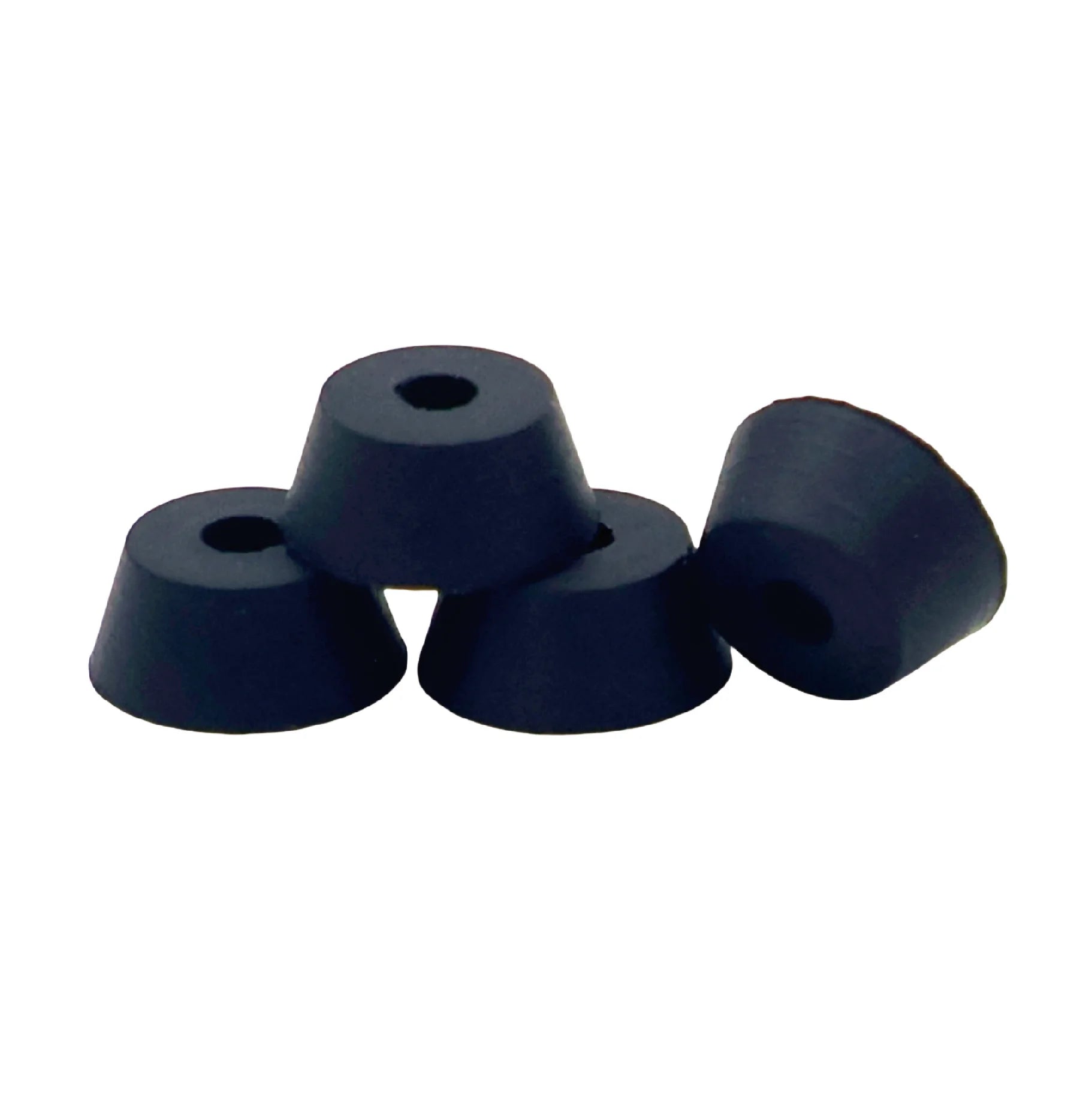
70A Cone Fingerboard Bushings
What Durometer Actually Measures
Durometer is a hardness rating measured on the Shore A scale, and for fingerboard bushings it describes how much the urethane resists compressing and turning under pressure. A lower number means softer, more compressible urethane; a higher number means harder, stiffer urethane that resists turning more.
The scale is relative, not absolute performance: a 60A bushing is not simply worse than an 80A bushing, it is tuned for a different feel. Riders choose durometer based on how loose or locked-in they want their trucks to turn, not based on which number is objectively better.
Soft Bushings: Looser, More Responsive Turning
Bushings around 60A sit at the soft end of the range. They compress easily, so the truck turns with very little resistance, which can feel fast and responsive for technical, flowy riding but can also feel unstable or wandery if you rely on the trucks holding a straight line during grinds and manuals.
Soft bushings are a good fit for riders who prioritize quick, easy turning over rock-solid stability, particularly on setups used mostly for flip tricks rather than long grinds.
Medium and Firm Bushings: The Balanced Middle
70A and 75A bushings occupy the middle of the range and are the most common default choice on complete setups. They offer enough give to turn naturally without feeling stiff, while still resisting enough to keep the trucks stable through grinds and manuals.
If you are unsure what durometer to choose, medium bushings in the 70-75A range are the safest starting point, since they do not lean hard toward either the loose or the locked-in extreme.
Hard Bushings: Maximum Stability
Bushings at 80A and above resist turning the most, giving the trucks a stiff, locked-in feel. This is useful for riders who want maximum stability during grinds, manuals, and technical lines where an unexpected turn would throw off the trick.
The tradeoff is responsiveness. Hard bushings take noticeably more finger pressure to turn, which some riders find less natural for fast, flowing lines, even though they reward precision and control once you are used to the feel.
Cone vs Barrel Shape
Cone-shaped bushings are narrower at one end, which lets them compress and turn more progressively; they tend to feel responsive at first touch and are a common default shape. Barrel-shaped bushings are cylindrical throughout, which means they resist turning more evenly across their full range and generally feel more stable and less prone to sudden give.
Many trucks pair a cone bushing on top with a barrel bushing on the bottom, combining the responsive initial turn of a cone with the added stability of a barrel underneath.
How to Tune Tightness
Beyond swapping durometer or shape, you can also tune feel by adjusting how tightly the kingpin nut is threaded down onto the bushings. Tightening the kingpin compresses the bushings further, adding stability but reducing turn; loosening it lets the bushings sit more freely, increasing turn but reducing stability.
Small adjustments make a noticeable difference on a fingerboard given the scale involved, so make incremental changes and test after each one rather than making a large adjustment all at once.
Bushing Durometer Reference
| Durometer (Shore A) | Feel | Best For |
|---|---|---|
| 60A | Very soft, loose, easy to turn | Fast, flowy riding and flip-focused setups |
| 70A | Soft-medium, natural turn with some hold | Riders wanting responsiveness with a bit more control |
| 75A | Balanced, the common default | Most riders and most complete setups |
| 80A+ | Hard, stiff, maximum stability | Grinds, manuals, and control-focused riding |
Frequently asked questions
What durometer bushings should I use for my fingerboard?+
75A is a common balanced default. Choose softer bushings around 60-70A if you want easier, more responsive turning, or harder bushings at 80A and above if you want maximum stability for grinds and manuals.
What does Shore A mean for fingerboard bushings?+
Shore A is the durometer scale used to rate how hard or soft the urethane is. Lower numbers are softer and turn more easily; higher numbers are harder and resist turning more.
What is the difference between cone and barrel bushings?+
Cone bushings compress and turn more progressively, giving a responsive feel from the first touch. Barrel bushings resist turning more evenly throughout their range, giving a more stable, less sudden feel.
How do I make my fingerboard trucks tighter?+
Thread the kingpin nut down further to compress the bushings more. This adds stability and resistance to turning, at the cost of some responsiveness.
Can I mix different durometer bushings on the same truck?+
Yes. Many riders pair a softer bushing with a harder one, or a cone on top with a barrel underneath, to blend responsiveness with stability rather than choosing one extreme.
Do harder bushings wear out slower than soft ones?+
Durometer is about hardness and feel, not durability. All urethane bushings will eventually compress and lose some response over time regardless of durometer, though how hard you ride affects the timeline more than the hardness rating itself.
Ready to build?
Shop precision completes, decks, molds, and hardware from the Lab.