How to Choose Fingerboard Trucks: Width, Bushings & Sizing
The right fingerboard trucks are the ones whose width closely matches your deck width, since mismatched trucks make a board feel unstable or sluggish no matter how good the individual parts are. Beyond width, the two other decisions that matter most are the baseplate and kingpin design, which affect how realistically the trucks turn and grind, and the bushings, which control turning resistance. Get width right first, then choose bushings and baseplate style based on how tight or loose you want the ride to feel.
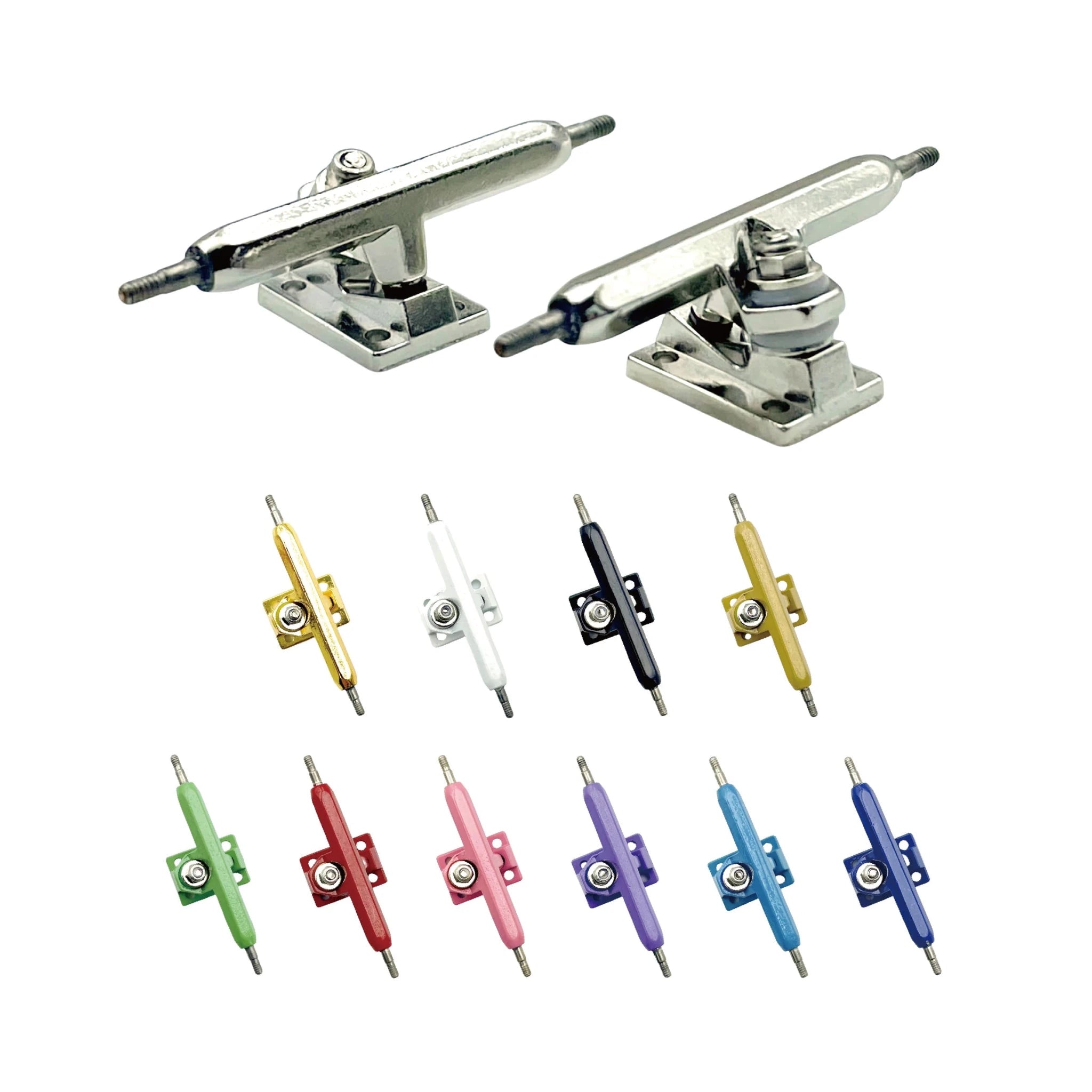
34mm A2 Fingerboard Trucks — Multi-Width
Start With Width, Not Brand or Looks
Truck width should be matched as closely as possible to your deck width, since this single spec has the biggest effect on how balanced a setup feels. Trucks that are noticeably narrower than the deck make the board feel tippy and unstable; trucks that are noticeably wider make flips feel sluggish and reduce control.
Being off by 1-2mm in either direction is generally fine and often unavoidable since deck and truck widths do not always land on identical numbers. See our truck-to-deck width chart for exact recommended pairings across common deck sizes.
Single vs Double Kingpin Baseplates
Most performance-oriented fingerboard trucks use a single kingpin baseplate, the same design used on full-size skateboard trucks, where one bolt runs through the bushings and pivot to control turning resistance. This design gives the most realistic, tunable turning and grinding feel.
Lower-end truck sets sometimes use simpler baseplate designs built around o-rings instead of a true kingpin-and-bushing setup. These are functional and inexpensive, but they generally cannot be tuned the way a true kingpin design can, and they tend to feel less precise during grinds.
Why Bushings Matter
Bushings are the small urethane pieces that sit around the kingpin and control how much resistance the truck has when you turn or lean it. Softer bushings turn more easily and feel looser; harder bushings resist turning and feel tighter and more stable, especially useful for grinds and manuals where you do not want the trucks wandering.
Because bushings are a separate, swappable part on true kingpin trucks, they are also the easiest way to fine-tune how a setup feels without buying entirely new trucks. See our full bushings guide for durometer ranges and shapes.
Matching Trucks to Your Riding Style
If you ride technical, fast flip tricks, slightly narrower trucks relative to your deck and softer bushings tend to feel more responsive. If you focus on grinds, manuals, and park-style lines, trucks matched closely to deck width with firmer bushings give you the stability to hold a line without the trucks turning unexpectedly underneath you.
There is no universally correct combination; the width match matters most, and everything else is a tuning decision you can revisit as your style develops.
Truck Width to Deck Width Matching
| Deck Width | Recommended Truck Width | Notes |
|---|---|---|
| 29-30mm | 29mm | Narrow trucks keep the setup proportional for smaller decks |
| 32mm | 32mm | The most common narrow-to-mid pairing |
| 33-34mm | 34mm | Matches the most popular and widely stocked deck width |
| 36mm | 36mm | Wider trucks add the stability wide decks are chosen for |
Frequently asked questions
Do fingerboard trucks need to match the deck width exactly?+
Not exactly, but as closely as possible. Being off by 1-2mm is generally fine; the goal is avoiding trucks that are noticeably narrower or wider than the deck.
What happens if my trucks are too wide for my deck?+
Trucks that are wider than the deck make flips feel slower and reduce overall control, since the wheels and turning radius no longer match the board's proportions.
What happens if my trucks are too narrow for my deck?+
Trucks that are noticeably narrower than the deck make the setup feel unstable and tippy, since there is less of a base supporting the wider deck.
What is the difference between single and double kingpin fingerboard trucks?+
Single kingpin trucks use one bolt through the bushings and pivot, the same design as full-size skateboard trucks, and offer the most realistic, tunable turning feel. Some budget trucks use simpler o-ring designs instead, which are less tunable.
How do bushings affect fingerboard trucks?+
Bushings control how much resistance a truck has when turning. Softer bushings turn more easily and feel looser, while harder bushings feel tighter and more stable, which matters most for grinds and manuals.
Should beginners buy soft or hard bushings?+
Medium bushings are the safest starting point for beginners, since they turn easily enough to feel responsive without being so loose that the trucks wander unpredictably during grinds.
Ready to build?
Shop precision completes, decks, molds, and hardware from the Lab.