Fingerboard Obstacles and Ramps: What to Buy First
Buy a kicker or a flat bank first, a rail second, and a stair set only once you can land ollies consistently. A first park needs pieces that reward the tricks you already have: one launch obstacle, one grind obstacle and one flat area between them. Everything else can wait until those get boring.
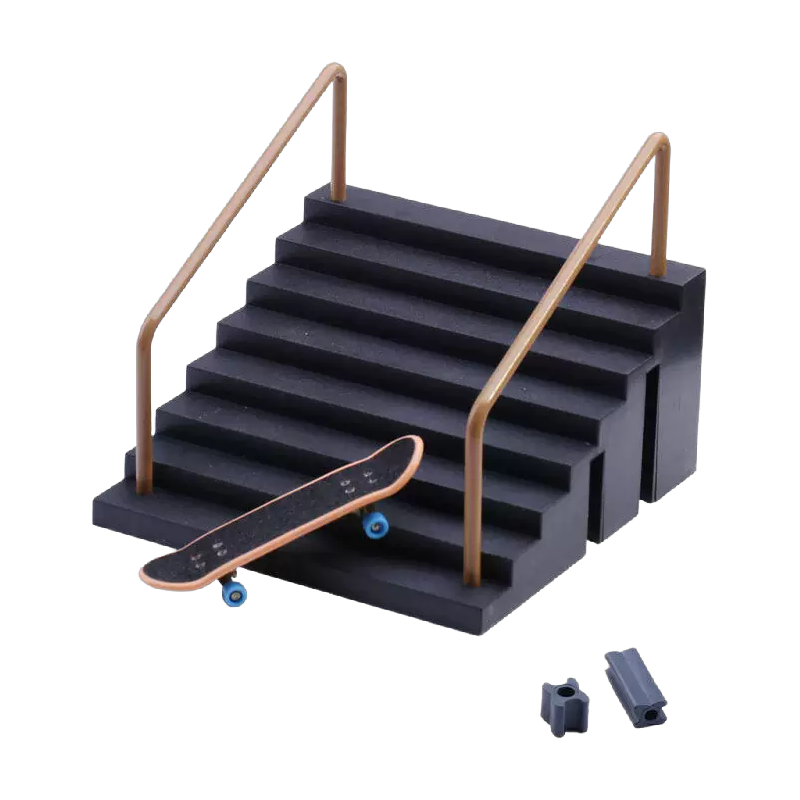
Fingerboard Park Set with Stairs and Rail (Board Included)
The First Three Pieces Worth Owning
A kicker or flat bank is the best first purchase because a launch ramp makes every trick you already know more useful: ollies become gap tricks, shuvits become bank tricks, and kickflips get a landing that forgives imperfect pops. Look for alloy or hardwood pieces with a non-slip surface; plastic banks are fine but slide around on hard desks unless you tack them down.
A rail comes second. Low round rails (2-3mm bar) teach grind balance without the commitment of taller square rails. Rail height matters more than length for beginners: if you cannot lock into a 50-50 on the ground, a rail will not fix it, so start low.
A stair set or ledge comes last. Stairs demand speed and a clean pop, and they are the piece that punishes sloppy technique hardest. They are also the most satisfying obstacle once you can use them, which is why they are worth the wait rather than the impulse buy.
Materials: Alloy, Wood and Plastic Compared
Alloy pieces are the standard for good reason: they are rigid, they have a consistent surface texture that wheels grip, and they survive being knocked off a desk. Weight matters too — heavier pieces stay put mid-line.
Wooden pieces feel more realistic and sound better, but wood reacts to humidity and the surface can go slick with wear unless it is griptaped. Wooden brick systems are the exception: they stack into custom layouts, which makes them the most flexible option once you own more than a few pieces.
Plastic sets are the cheapest way to fill a desk and the lightest to travel with, but flex under hard landings is real. They are a fine way to test whether you will actually use a park before spending on alloy.
A sane buying order
| Order | Piece | Why | Typical price |
|---|---|---|---|
| 1 | Kicker or flat bank | Makes tricks you already have more useful | $10-25 |
| 2 | Low round rail | Teaches grind balance safely | $8-20 |
| 3 | Stair set or ledge | Speed and precision, big payoff | $20-50 |
| 4 | Bowl or quarter pipe | Transition skills | $25-50 |
| 5 | Brick/connector system | Endless custom layouts | $30-50 |
Frequently asked questions
How big should a first fingerboard park be?+
About 40-60cm of connected surface is plenty: one launch piece, one grind piece and a run-up between them. Bigger parks mostly collect dust if the pieces don't connect.
Do obstacles work on a wooden desk?+
Yes, but light pieces slide. Alloy bases or a thin rubber mat underneath solve it without permanent tape.
Should I buy one big set or several small pieces?+
One coherent set usually beats loose pieces at the start because the heights are designed to connect. Add singles later once you know which lines you skate most.
Ready to build?
Shop precision completes, decks, molds, and hardware from the Lab.