Fingerboard Deck Materials Explained: Maple Plies & Veneer
Most quality fingerboard decks are built from five plies of maple veneer pressed together on a concave mold, closely mirroring how full-size skateboard decks are made. Ply count controls the balance between stiffness and flex: more plies mean a stiffer, more durable deck with sharper pop, while fewer plies produce a lighter, more flexible feel. The grade of maple veneer used also matters significantly, as higher-grade, tighter-grained wood distributes pop more evenly and resists delamination longer than lower-grade alternatives.
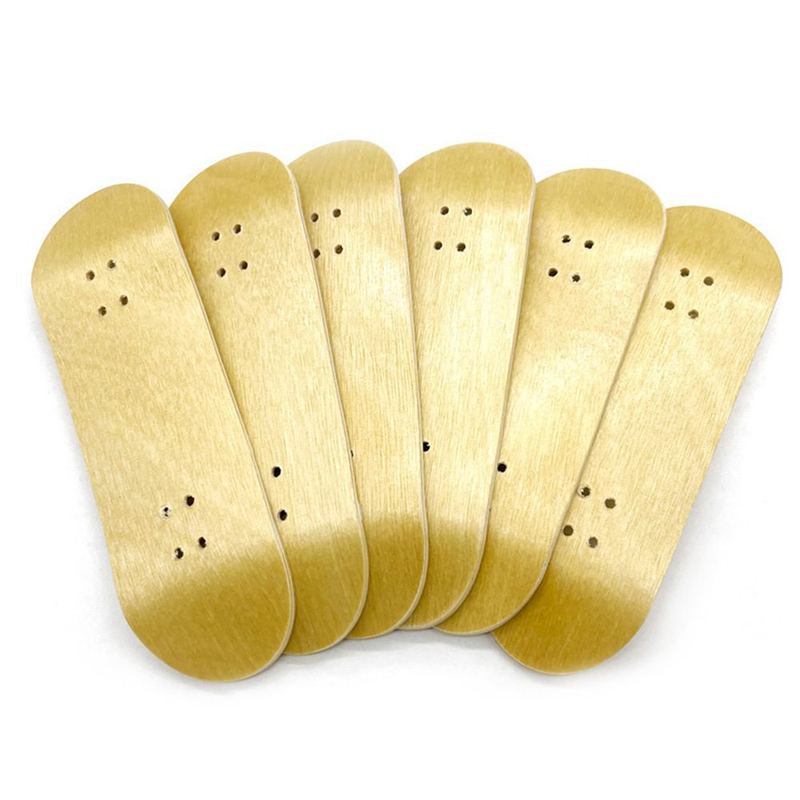
Maple Fingerboard Veneer Blanks 100×32/34mm — Pack of 2
Why Maple Is the Standard Fingerboard Deck Wood
Hard maple has been the dominant material for skateboard decks of all sizes for decades, and fingerboard decks follow the same logic. Hard maple offers an ideal combination of strength, flexibility, and consistent grain structure that allows thin veneers to hold their shape under repeated stress. The wood is dense enough to transfer the snap of a kick into clean pop without absorbing all the energy.
Alternative materials like bamboo, birch, and composite laminates have appeared in the fingerboard market over the years, but none have displaced maple as the baseline standard for quality decks. Maple's predictable behavior under load makes it easier for manufacturers to produce consistent concave and kick profiles across batches.
Understanding Ply Construction and Veneer Thickness
A standard fingerboard deck consists of five plies of maple veneer glued together with their grain directions alternating perpendicular to each other. This cross-grain construction, known as cross-lamination, is what prevents the deck from warping, cracking along a single grain line, or splitting when pressure is applied during tricks. Each ply is typically between 0.5 mm and 1 mm thick, which means a finished five-ply deck measures roughly 3 to 5 mm total.
Some manufacturers use seven plies to create a stiffer, heavier deck with more pronounced pop. A seven-ply construction increases overall stiffness significantly and can extend the life of a deck by adding layers of wood between the contact surfaces and the structural core. The tradeoff is added weight and reduced flex, which some riders find less responsive for technical flip tricks.
Three-ply decks exist at the opposite end and are generally reserved for toy-grade products. Three plies lack the structural integrity to handle repeated flexing without delaminating at the glue joints relatively quickly. Serious riders almost universally prefer five or seven-ply constructions.
Veneer Grades and How They Affect Performance
Not all maple veneer is created equal. Veneer grade refers to the consistency, tightness, and regularity of the wood grain along the sheet. Higher grades have tighter, more uniform grain lines, fewer knots, and fewer voids in the wood structure. When veneers of this quality are laminated, the result is a deck that pops crisply and predictably and deforms less over time under repeated stress.
Lower-grade veneers may have wider, irregular grain patterns or small natural inconsistencies that create weak points in the finished laminate. These decks may still perform acceptably at first, but they tend to develop a dead, waterlogged feeling more quickly, lose pop sooner, and are more prone to delamination at the edges where grinding forces are highest.
Premium fingerboard manufacturers source veneer specifically graded for skateboard construction rather than furniture or general woodworking. While this is rarely labeled explicitly on packaging, it is a meaningful quality differentiator between a budget blank deck and a deck from a specialty fingerboard brand.
Concave Molds, Press Shape, and What They Do
Raw veneer stacked flat would produce a flat deck. Concave, the upward curve across the width of the deck from rail to rail, is created by pressing the laminated veneer stack inside a mold while the glue cures. The shape of the mold determines the final concave profile: a deeper mold produces high concave, a shallower mold produces a mellow or low concave.
The press also sets the kick angles at the nose and tail. Steeper kicks mean the board rises more sharply at each end, which typically translates to more explosive pop but requires more deliberate foot placement. Mellow kicks are more forgiving and easier to control for tricks that rely on smooth flicks rather than explosive snaps.
Once the glue cures and the deck is removed from the mold, the shape is permanent as long as the wood stays dry. Moisture is the primary enemy of a pressed wood deck, as prolonged exposure causes the plies to swell and delaminate, and can cause the concave to flatten out irreversibly.
Graphic Layers and Their Impact on Deck Feel
Many production decks include a printed graphic layer bonded to the bottom ply. These graphics are typically applied as a heat-transfer print or a printed veneer slice rather than paint, keeping the addition thin enough to avoid meaningfully changing the deck's flex or pop characteristics.
Some decks apply a clear lacquer or gloss coat over the graphic, which adds a small amount of hardness to the outermost bottom surface. This can slightly increase durability of the graphic itself and reduce scratching, but it does not change structural pop or flex in any meaningful way. The critical structural layers are always the interior plies and the top surface where your fingers make contact.
Ply Count vs. Deck Characteristics
| Ply Count | Typical Thickness | Stiffness | Pop Feel | Best For |
|---|---|---|---|---|
| 3-ply | ~2–3 mm | Low | Soft, muted | Toy-grade / budget only |
| 5-ply | ~3–4 mm | Medium | Crisp, responsive | Most riders, versatile |
| 7-ply | ~4–5 mm | High | Sharp, stiff | Durability-focused riders |
Frequently asked questions
What is a fingerboard deck made of?+
Most quality fingerboard decks are made from five layers of hard maple veneer pressed together with alternating grain directions and glued with wood adhesive. The cross-laminated construction gives the deck its stiffness, durability, and pop.
Does ply count affect fingerboard pop?+
Yes. More plies generally mean a stiffer deck and sharper, more explosive pop. Five plies is the most balanced option for a mix of pop and flex, while seven-ply decks are noticeably stiffer and better suited to riders who prioritize durability over flexibility.
Why do fingerboard decks warp?+
Warping is almost always caused by moisture. When wood absorbs water unevenly across the plies, the layers expand at different rates and pull the deck out of shape. Keeping your deck dry and avoiding prolonged contact with wet surfaces prevents most warping.
Is maple better than bamboo for fingerboard decks?+
Maple is the established standard and produces the most predictable, consistent pop and feel. Bamboo has been used in some fingerboard decks and can offer comparable strength with slightly less weight, but maple's longer history in skateboard construction means quality control is better understood across most producers.
What does veneer grade mean for a fingerboard deck?+
Veneer grade describes the quality and consistency of the wood grain in each ply. Higher-grade veneer has tighter, more uniform grain lines and fewer natural defects. Decks made from higher-grade veneer typically maintain their pop longer and resist delamination better than decks made with lower-grade wood.
Want your own graphic on a real maple deck?
Skip the paint and upload your design instead. We press it by hand — your artwork, your size, shipped in days. Starting at $89.
Ready to build?
Shop precision completes, decks, molds, and hardware from the Lab.